
“Although each is motivated by a deep sense of confusion and lostness, a sense that the darkness of being adrift is a central feature of the age, nevertheless each feels strongly that the writer’s responsibility is to show the way forward, to offer a vision of the hopeful possibilities available in the modern world.”
“Her memoir takes off from the assumption that we all know what that kind of darkness is like – it is only, and needs only to be, drawn in the broadest and dimmest of strokes. The burden of her story, instead, is to show us how one can go forth from that dark place, to tell us what it takes to emerge into the light.”
Hubert L. Dreyfus & Sean Dorrance Kelly in All Things Shining, 2011, writing on the similarities between writers Elizabeth Gilbert and David Foster Wallace.
How can one “go forth from that dark place and emerge into the light”?
What does it actually mean?
What do the metaphors of darkness and light correspond to in the realm of our experience of existence?
This means that the paths that open from the texture of our daily existence, the ups and downs that punctuate the longer arc where our lives are headed, need to bear these rays of light that vitalise, comfort, embrace and warm, as sunlight does.
After all, all life forces are ultimately born from the sun’s energy. All living beings find their way to their share of the photosynthesised resources that plants obtain from sunlight. Herbivores do so directly, by consuming the plant, while carnivores by consuming the flesh made nutritious by the plant. The sun is raw life force: its heat mobilises our being to the core, sets all our atoms vibrating, reactivates our minds.
And its light gives colour back to the world, revealing what was once hidden, revealing the world that extends beyond the cage of our minds, while dissipating the horrors with which the mind in its most helpless states fills the unseeable darkness.
Everything that is home to us, that is life and the glory of life, is a little like the sun at its best. Even our hearts beat for and pull us toward everything that is like the sun to us, everything that is vitalising. Perhaps our hearts themselves are a lifeline to the spirit of the sun; and the sun is present in all dimensions of life (call them physical, biological, spiritual, psychological, metaphysical, symbolic, and so on) because ultimately all of it was born from the sun’s energy imbibing the earth. But the sun shouldn’t be the only source of this life-giving force.
Everything that doesn’t feel spiritually like this (or tending toward this) like warming oneself in the sun on a warm spring day, is what tends toward darkness. It might be a minimal nudge, but still a nudge directed toward the dark. And we can only take so much darkness before we need the sun.
We all carry the capacity to find what is “sunlike” in the world we experience, regardless of the presence of the literal sun. This capacity takes on different forms in each person. It is something we are seemingly born with or born towards, and even if its particular nature varies among us, we all share this presence within.
Some call it finding what is meaningful to us, what gives meaning to our existence. I believe it goes deeper than mere meaning, in the sense of defining our values, what is sacred to us, what defines the basis of our choices and commitments, what we pay more attention to, or what moves us. It is something experienced in our whole being, and perhaps even beyond it.
And this something is sunlike because it permeates all dimensions of our being: to feel the equivalent of what sunlight feels like physically to a sun-starved body, but in terms of that particular dimension. How do we translate this feeling to the psychological experience of the world, the interpersonal experience, the active experience, the spiritual experience?
A sun that is as pleasing as heavy bedsheets sheltering our warm bodies as we wake, but that does not pull us back into slumber the way our beds do. The sun is both comfort and a mobilising force, readying us for yet another incursion into the cold dark once more.
So “emerging into the light” means to emerge into a place where the vitalising light of the sun is constant, instead of infrequent, desperate slivers peeking through crevices in the walls of an endless, inescapable maze of darkness. It is a figurative place in the sense of permanence: a place is somewhere we can dwell, somewhere with certain constant characteristics that distinguish it from what lies outside.
In our existence, at its most elemental, we need to be heliotropic lest we gradually but unrelentingly fade away. And the sun is both literal and figurative. Its figurative presence can be found in the strangest places, but is ultimately made possible by faith in its continued literal existence, or its return some day. So we don’t need to call everything that gives us meaning and a zest for life “sunlike,” because as I said before, what is meaningful to us is not bound by what we can describe in words.
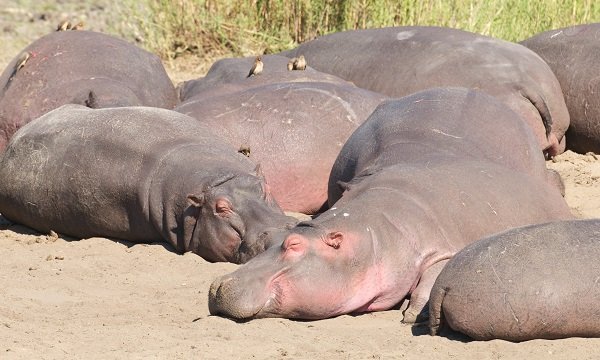
It is something we feel and experience from the deepest core of what we are, and that radiates outward to vitalise us entirely. The only certainty we can draw from this is that all experiences of meaningfulness, of love, of belongingness, of purpose, of fascination, of joyful presence, are variations and extensions of the most basic experience of the humblest living being simply finding their own little spot in the sunlight, resting in it to soak up its force after a cold search in the dark.
✵
Leave a Reply