
Table of Contents
- What we love is unique to every individual: an unrepeatable convergence of all that participated in our experience of existence
- The lopsided ratio between individual thought and unintended associations
- The endeavour of faithful iteration: a way to neutralise the inability to communicate authentically
- Beyond successful communication: nurturing the limitlessly growing network of what we cherish
- The essence of what makes us cherish things: an inexhaustible source of individual thought
What we love is unique to every individual: an unrepeatable convergence of all that participated in our experience of existence

When we are explaining things from our own genuine intellectual curiosity, we are slowly giving substance, presence, form, solidity and territory to what we love. We allow it to manifest in its purest form, rather than leaving it merely implied or polluted by the presumptions that conventional words, in their insufficiency, inevitably carry.
We bring along numerous inaccurate presumptions with each formulation we choose so that we can explain, describe, represent, reflect or celebrate what we love. This happens because what each person loves differs in its details by being unique to them. What we love is the product of the convergence of everything that had anything to do with our existence. It is everything that we have witnessed and participated in; it is everything that participated in our time on earth, or indirectly affected us even before our time, all contributing to the formation of our gradual growth as a conscious being in the world. Therefore, that aggregate makes up the essence of everything we love —a particular, recurrent essence, or signature, that marks everything we hold close to our hearts— is unique. Throughout humanity, there exist no two identical repetitions of this convergence in different people.
Let me clarify one thing: “what we love” encompasses that which we are naturally drawn to, which provides us intrinsic enjoyment and that we want to keep exploring further. It manifests as a singular ingredient present in all the qualities that make, for us, particular activities, particular products of our imagination, and other things in the world, reliably life-giving.
All the inaccurate presumptions that pollute our attempts to articulate and represent what we love through communicative means that operate within convention’s realm (such as words and other symbols), may steadily accumulate, resulting in an imbalanced ratio between what we actually want to say and that extra debris that invites misunderstandings.
The lopsided ratio between individual thought and unintended associations

The effect that conventionality introduces into this ratio between idea and debris is this: imagine that something we hold in our minds and wish to communicate contains three essential elements. We are trying to express these elements through the use of words. Yet, words never perfectly align with that which we want to convey — although if we are not in touch with what we love, we might unwittingly allow the pre-made definitions of terms to impose themselves upon our thoughts, deluding us into believing that our thoughts have always been exactly like what the terms’ instituted definitions instruct. Words are enfolded within layers upon layers, like stacks of translucent membranes, of evoked presumptions, or unintended associations almost entirely disconnected from what we want to convey.
For example, the word “entrepreneur” carries a complex web of unintended associations that could muddy its meaning. When someone employs that term, they might simply intend to convey that they plan to pursue certain activities with an eye toward their systematic evolution into a form of structured and sustained revenue. They might envision a prospective enrolment of people with certain qualities to collaborate in the further nurturing of these activities as they grow in effectiveness, complexity and ambition. Eventually, one of their aspirations might be that this systematised structure of activity blossoms into becoming their core source of wealth and how they define their societal role.
Yet, this word opens other conducts through which unintended associations inevitably seep in: visions of a clean-cut man in business-attire with an aggressively confident demeanour teetering on arrogance, a veneration of money-making as the driving force behind personal ventures instead of honest service to others, an infatuation with sport cars and private jets, a continuous employment of entrepreneurship-related buzz-words, a manufactured perpetual optimism, a lack of a “pure passion” beyond business, an appropriation of the term to claim an economic status not truly attained, a membership within a certain social class and a subculture, a fixation on productivity-metrics. These are some associations that come to mind, but the list is endless; the “entrepreneur” prototype of the early 2000’s could very well don a hoodie and sandals.
Thus, when we employ a word such as “entrepreneur” to express one of the three essential components of the concept we wish to convey (and the amount of words that carry the same effect is virtually limitless), we are expressing ourselves through a particular ratio between what we mean to say and the pollution, debris, or unintended associations that the word subtly infuses into our message.
At a more abstract level, the make-up of the contents of our first essential component could be reduced to the following proportion: one part constitutes what we truly mean to say —our intended meaning— while the other three parts consist of misleading debris. The ratio is then 1:3: every single part of intended meaning carries three parts of unintended associations with it.
Now, as we proceed to the other essential components of the concept we intend to describe, the ratio for the second one might be 1:4, while that for the third piece could be 1:3 as well. Consequently, though we have selected three terms or formulations to combine in service of expressing our idea, each carries with it an amount of debris that pollutes its received meaning to a non-trivial degree. The accumulated ratio for the entire idea would be 3:10, which reveals a substantial amount of unintended associations in our message.
The endeavour of faithful iteration: a way to neutralise the inability to communicate authentically

Of course, this phenomenon is not linear, probably not even precise in its mathematics, as it rather functions through analogy (to illustrate the kind of relations of imbalanced proportions between intended meaning and unintended associations that our words can carry). The importance of this analogy lies in its aim to drive home the point that our thoughts are not our words, especially when it comes to what we love. However, if we remain conscious of this gap, we can gradually fashion our communicative means into closer resonance with our thoughts.
For example, the combination of the debris from each element might complement each other to neutralise some of these inaccurate presumptions, providing additional contextual cues so that the receiver can interpret a meaning closer to what we mean. The more elements we successfully combine to express an idea, the more we close in on a true communication of it, hence why sometimes essays or books are needed to explain something accurately. Nonetheless, there always exists an implicit threshold of how many cognitive resources it is acceptable to expect from our listeners to invest in a given circumstance. Many times we are expected to be concise and use as few words as possible, while further explanations are not looked good upon, signalling a kind of fumbling uncertainty, intentional opacity, or disregard for others’ time.
A good way to deliberately combine elements to close in on what we wish to express, rather than allowing it to only manifest by accident, is through repeatedly endeavouring to capture as much as we can of what we mean in some kind of durable form (such as a text, a sentence, a concept, an intellectual artefact). We are always aiming to reach the highest possible fidelity to our original meaning.
In other words, we are engaging in crystallising what we mean into durable forms through successive iterations. We are testing different mould shapes to see which ones align most satisfactorily with that which we struggle to put forth with true resonance with what is meaningful to us.
Given that it is nearly impossible to succeed at first try, we need to begin by establishing an ideally accurate expression as our compass rather than a non-negotiable expected outcome, because we are almost guaranteed to fail short. In this case the term “failing” arrives loaded with unintended debris. As I mentioned before, this is a common occurrence: we might not be achieving this perfect communication, but the real success is in the process of continuous crystallisation. Thus failing is not necessarily something that we seek to avoid, nor something that we should punish ourselves for doing.
Beyond successful communication: nurturing the limitlessly growing network of what we cherish
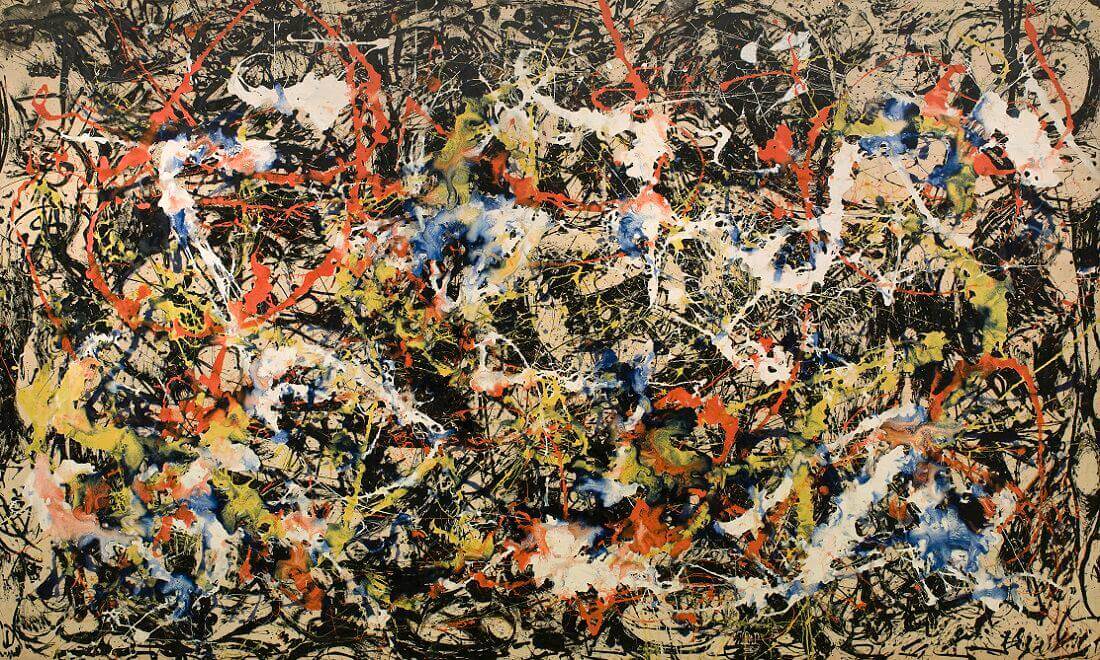
As we accumulate more of these durable expressions, we find that they interconnect through their sharing of our foundational motivation to make what we love increasingly real. Through this expanding network of meaning, we create our own own body of expressed thought. As a result of this process, the ratio gradually diminishes: we fashion, arrange and orchestrate more of our own artefacts to draw upon (our ideas, concepts, metaphors, forms of envisioning things, stories, our creative work, embodied symbols, our interpretations of others’ ideas) allowing us to express ourselves ever closer to that ideal 1:0. These artefacts will complement each other in a kind of co-responsive cohesiveness, some of them serving as buttresses for explaining others, as subtexts, undercurrents of implicit meaning, as inflectors of a particular desired tone or “mood”, imagery, ethos (in the Aristotelian sense: your credibility before expression, what the expected “genre” of your expression is), and so on.
The essence of what makes us cherish things: an inexhaustible source of individual thought
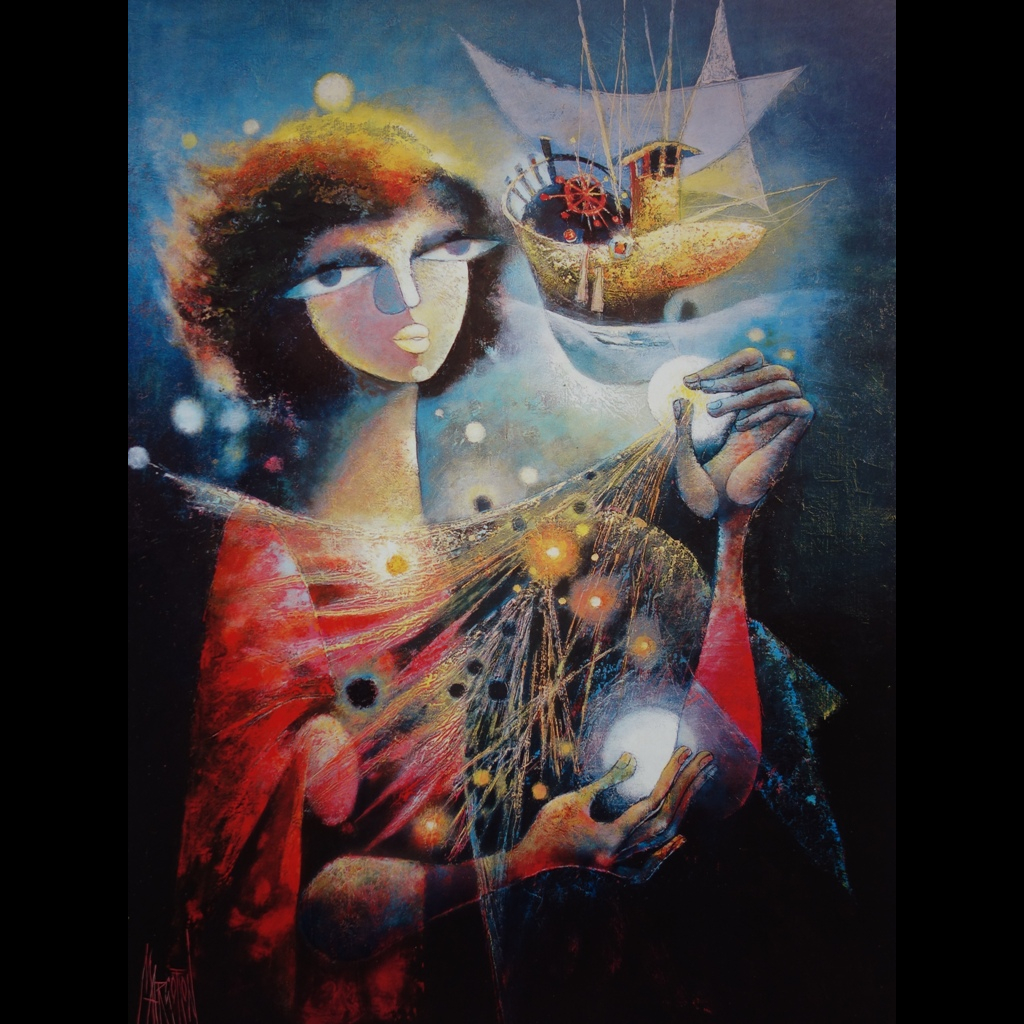
To make that which we love increasingly enduring, tangible and visible to us —so that we can discover it, talk about it, make it a part of everything we do— we need to find ways to challenge these lopsided ratios. Then, eventually, we will come as close as we can to 1:0. I think that the more we endeavour to give definite shape to what we love, with devotion —not without a healthy dose of obstinacy and irreverence— and through diverse manifestations, the better equipped we become to get there. We can redeploy these new elements that we faithfully bestowed shape upon in order to think more clearly, to express ourselves better, and eventually we’ll draw upon our entire creative corpus to live in uninterrupted attunement and harmony with what we love, as if we were effortless conduits of it —1:0 ratio conduits—, sharing it with others in its best version of itself.
As a concluding note, it is important not to confuse the products of that drive to seek what you love with an essential originality. In that convergence between what we love and how we channel it through some form of expression, these expressions will indeed carry something that is exclusively “us”, but it need not be an “idea” of shocking originality. It may be based upon groups of concepts that countless others have evoked, examined and developed countless times. Yet, our particular expressions of the same concepts (or perhaps not the same, but extensively overlapping with them) will be marked and shaped by a certain rhythm, by an imagery attached to how we make sense of things and explain them to ourselves. They will radiate particular resonances highlighting certain elements while diminishing others —resonances that we tend to amplify where others might dismiss them, because they matter to us precisely in that way.
Our expressions will be shaped by such variables because they emerge in relation to our unique existence and what we’ve come to cherish. They will constitute one of the many life-affirming ways of communicating those concepts that you will become able to create. Even if the “idea” has been expressed before, there’s always something new in one’s way of formulating it: it is something else with a new texture, new possibilities, new resonances for other people that are more like us, with similar preoccupations and sensibilities.
Or perhaps they will connect with very different individuals who might somehow experience a momentary match in our wavelength as they pass by it —a momentary feeling of bursting our heads out of the turbid, thick waters of daily existence, of breaking to the surface under a clear sunny sky; a fleeting connection reminiscent of those proverbial ships passing in the night.
Leave a Reply