
How we crystallise who we are in the world.
⚘ Branches: Waterways for flooding states of the mind
Table of Contents
- Oblivion is entropy
- The limitations of the individual mind
- Anchors for our identities
- We all contain multitudes
- Territories and fertile areas of the self
- Our kingdom
- First benefit: sturdy workstations for resuming work
- Second benefit: facilitating human connection and mutual development
- Third benefit: actualising our naked self
- Do we have an inescapable essence?
- Our intertwining with the world
Oblivion is entropy
How do we confront oblivion as we hold our identities together?
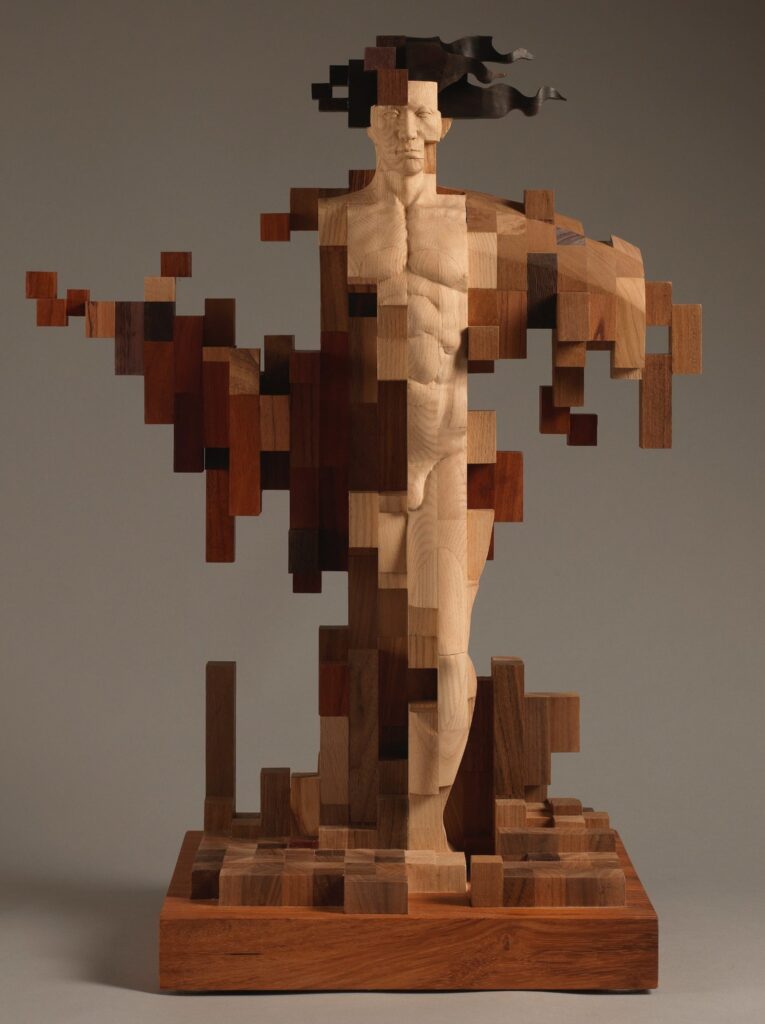
Oblivion is entropy. Things that dissolve into oblivion become a cloud of unstructured, disconnected particles that cannot be reassembled anymore. Dreams exemplify of oblivion. Once we forget them, most are gone forever. There are no loose threads we can grasp with any hope of sewing the whole back together. Fragments of what they used to be become scattered in our minds like vagrant spores, meaningless particles nestling themselves in other regions.
Much of our identity can likewise slip into oblivion if too much of it accumulates within our limited minds. Even if these elements will never entirely dissolve into hopelessly unstructured clouds of particles, they will degrade enough that they become too vague and fluid for us to retrieve them, or to integrate in our behaviour toward the world.
If we consider our being as an isolated individual, our identity would consist of components such as our memories, our thinking habits, our individual thoughts as they emerge, our behavioural habits, internalised skills, knowledge, muscular memory, emotional patterns and subconscious processes.
Then, as we look from the mind-body1 outward, we discover other strings tethered to our identity**. Our family and friends continuously confirm our identity to ourselves.** They treat us a certain way, they talk to us a certain way, and we reciprocate according to what we perceive their identities to be. They perceive us from their perspective, and we glimpse parts of our identity reflected in their behaviour toward us. If we were to lose these people, parts of our identity would lose their foundation and collapse, as nothing would remain to confirm them aside from our memory, concept of ourselves, and habits. And these resources are limited, endlessly malleable by the inconsistent nature of our organic minds2. A concept like reputation reflects this phenomenon: an image of our identity -however distorted- becomes enduring in the minds of several people. It transforms into an intersubjectivity, consolidated through being shared across the minds of many people.
The concepts, heuristics, mental models, systems that we integrate into our way of making decisions and interpreting the world around us also serve as anchors for our identities. They pack ideas together into tight, structured bundles, eliminating the need to contemplate each separately when using them as a lens through which we interpret things. Without these structured abstractions, easily replicable through the use of words (we can consult them whenever we want, once we document them), the parts of our identities that they buttress will also risk dissolving into oblivion.
If we lose the ability to swiftly interpret things in our customary way, then something in our identity undergoes transformation. We will interact differently with the world, because our interpretation will be different: we will highlight some things that we perceive while obscuring others; we will be attributing particular causes and effects to them, we will be making value judgments (as good or bad) based on the reasoning -and reasons- that our concepts provide.
Another extension of our identities lies in objects. These are primarily objects that we own, meaning that are very often surrounded by them and we can reliably make use of them when we need to. In a functional sense, these objects facilitate certain courses of actions, certain kinds of behaviours over others. They assist us in doing so through the very function for which they were designed (or the function that reveals itself to someone thinking out of the box).
In terms of meaning, objects remind us of our identity by reflecting back to us the parts to which they are attached. Just like for example songs, we associate the objects around us with certain memories, with certain intentions, moods and tones: Why did we acquire it? How? What has occurred in the presence of that object? Even if we do not deliberately decide upon it, everything in our homes will reinforce a particular way of being. However, when done intentionally, each object becomes the product of a process of contemplation of our identities -an attempt to give it a discernible and intelligible form in the external world. In this case, this form emerges from the aggregate of objects we choose to own or be surrounded by. And here, the whole transcends the sum of its parts.
So we will regularly witness this collection of objects, as will others who visit our homes. The same principle applies to mobile objects such as clothing and other accessories.
The limitations of the individual mind
The conscious layer and the unconscious layer
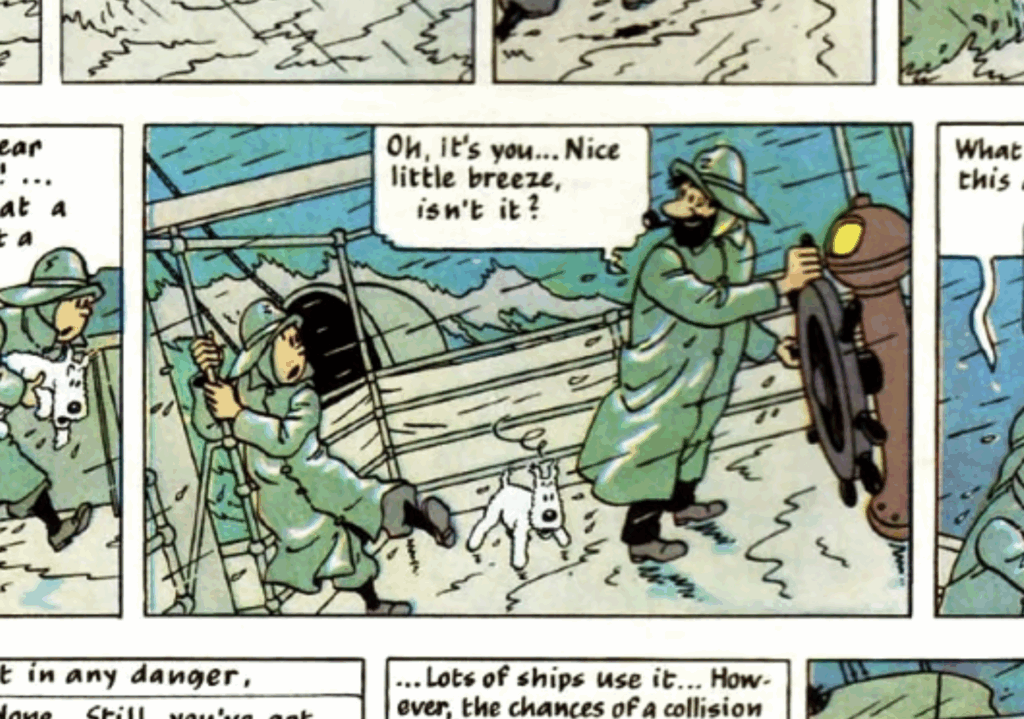
We cannot handle our full identity with only our mind and body. Humans simply cannot. Our own identity, the fertile soil for our thoughts, emotions, inspiration, perception, interpretation, and experience of the world, will become too vast for our own mind-body processing capacity. So we will strive to provide it with a more durable existence.
Think about it. We might be blessed with a subconscious that performs all that intuitive work behind the scenes, arranging our thoughts, cementing lessons from daily experiences and practices, interpreting our engagement with the world in holistic ways that our conscious thought cannot even dream of achieving. Yet the subconscious does not obey conscious will. We cannot direct our will toward something and instruct our subconscious to make sense of it. It does not follow the rules of the surface world, the one where life in society unfolds, where we make conscious choices and attempt to materialise desires, purposes, and more. This is neither fortunate nor unfortunate; it simply it.
On one hand, subconscious processes make life less overwhelming, allowing us to experience it without having to manage all the input that we are actually absorbing from everything. And meanwhile, it is not simply discarding all this input, but processing it in extremely dynamic, sophisticated ways without requiring us to do much more than keep ourselves together in the conscious world.
On the other hand, as I just described, our subconscious will not unconditionally cooperate with us. If it processes certain things in ways that are not helpful, constructive, or are downright emotionally painful, we cannot simply message it and tell it to stop. We must learn to understand it, case by case, and take steps to remedy it -people try to do this through therapy, for instance-. It is a long and arduous process, ill-suited for a fast-paced environment where change needs to happen quickly.
Meanwhile, the conscious layer of our mind is where we fix our attention upon particular things and attempt to understand them by ‘thinking hard’ about them. This is the layer where make decisions and execute them, where we make choices, where we follow action paths -”I focus on this, I interpret it this way, so I will proceed like this and not like that”-. It is wonderful to be a conscious being, yet our minds do not possess such a big working surface to tinker with thoughts.
This mental workspace becomes even less practical when we do not even have concepts, theories, mental constructions of things that can help us move faster in our thinking: without having learned and then decided upon a particular concept of what decent behaviour is, our minds become trapped examining the behaviour of people on a case by case basis. We have no principles to guide our judgment with any reliability.
Rather than simply comparing a witnessed behaviour against our concept of decency and quickly assessing it, we become bogged down, forced to mud through the interpretive process. We evaluate each aspect that we can distinguish of the situation and according to the particular context where we witness it. We then put all of these impressions together to reach to a conclusion about this behaviour, allowing our decision to be guided by whether it seems more or less beneficial at that particular moment. Certainly, meticulously assessing situations and contextualising them is not inherently flawed, but when done without concepts and principles to frame our interpretations, it becomes a losing battle: our mind’s working surface cannot retain all those elements in place without any tools to compress them, manipulate them, or blueprints to guide our work. We will end up making decisions without a rationale that will make sense to us neither in the short nor the long term. We will realise that we failed to thoroughly consider the situation in the heat of the moment, perhaps forgetting certain aspects of how we aspire to behave when faced with situations we disapprove of.
In other situations, when pressured to act quickly, we will likely default to instinct, letting the subconscious to decide by communicating with us through a ‘hunch’ or a ‘vibe’ we cannot adequately explain. Sometimes this succeeds when our subconscious just happens to be properly calibrated to these specific situations, but relying on it for all situations remains unrealistic.
This oscillation between guidance from mental constructs and wading through unorganised input is constantly happening in our minds. And this represents merely a facet of the process. Our conscious minds exist in perpetual flux, like a boat violently lurching through the stormy ocean of the subconscious: shifting emotional states conditioning our energy levels, intrusive thoughts crashing in, the winds of our attention altering our course, etc. Meanwhile, thoughts spill overboard as our memories become overloaded: we lose our train of thought, we forget how we got there, we encounter an impasse in our reasoning, our thinking takes a needlessly negative turn, we decide that we need to focus elsewhere and drop all our thinking process up to this point, and so on. Sometimes it can even feel like we are highly capable but unsure jugglers upon this boat tossed by the waves.
Thus, through abstract constructs, objects and close relations, we may alleviate these fluctuations by anchoring all these unwieldy manifestations of our inner world and achieve some tranquility. We may rely upon them to extract our boats out of the occasional whirlpool, where our identity may end up sailing in circles, guided by a mix of incomprehensible subconscious forces and uncritically integrated cultural instructions for how to proceed in our thinking, interpretation, decision-making and behaviour. These anchors are solid and objective, in the sense that once the storm subsides, we will remain by them and they will have not changed. They might not be perfectly accurate, as they are rigid by definition, but they provide a chance at constancy. We must know our previous position to resume our journey from there.
Anchors for our identities
Springboards to further emergence: the mutually shaping relation between the anchors we choose and who we are.
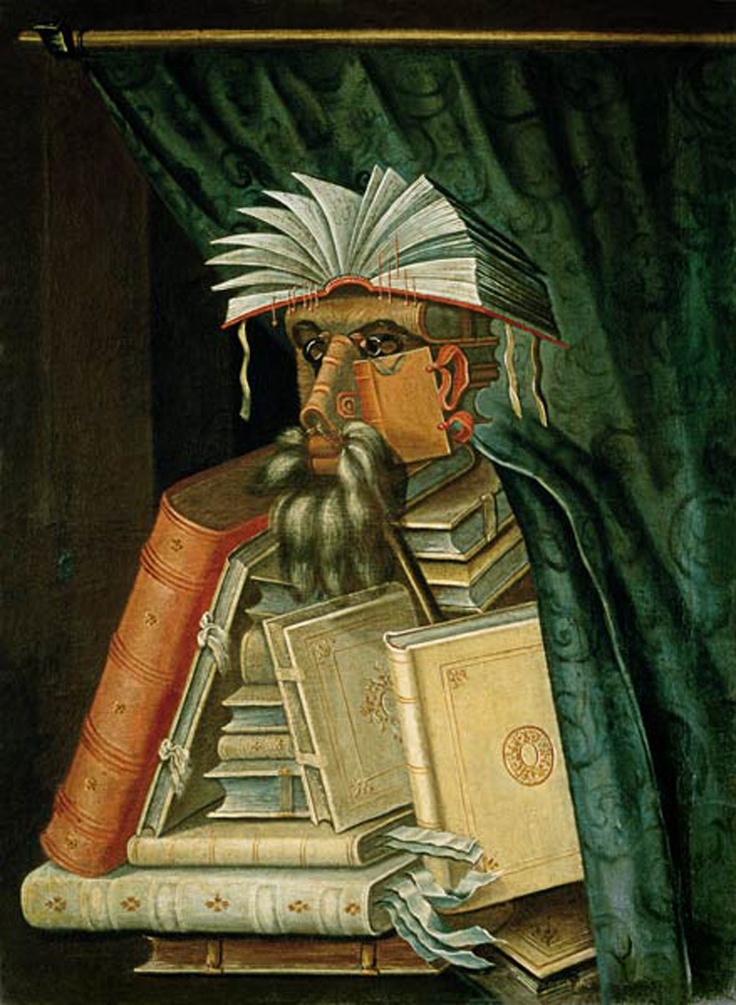
We accomplish this for instance by imprinting meaning on objects around us. These objects summon certain associations, while the associations themselves become imbued with the object’s characteristics. The particular style, shape, and symbolic connotations of the object will in some way shape the association itself. We can associate an old cherished lamp with the initial exhilarating moments of independent living in our own place. And this lamp can be a second-hand lamp with an art deco design, which might infuse that first association with an awareness of our changing taste overtime, along with subtle fantasies of a 1930s café society lifestyle. We have effectively used the object’s qualities to make a particular feeling from a particular time instantly evocable -accessible- while also making use of its physical attributes to lend it certain overtones.
This symbiotic relationship also occurs with metaphors: we explain a particular idea through a metaphor, constraining the idea itself by the governing laws of that metaphor (if we use a metaphor related to cultivation, our idea will be exclusively explained through cultivation-related processes). Hence, the idea gives meaning to the metaphor, but the metaphor establishes the limited types of causes and effects, developments, variations, and relations with other things that the idea can follow.
And naturally, our most frequent anchors are words themselves. We combine them to give durable shape to our thoughts. We do this constantly: we have a thought about something that happened, a feeling emerges, we feel something, a sense of urgency, and it disturbs our peace, we cannot sleep. So we attempt to articulate this feeling to ourselves in words, latching elements of this feeling to sufficiently compatible words to give it shape and make it communicable, both to ourselves and others.
When we have added these clamps so that the thought can hold up with at least a loose structure -meaning it will resist the entropic tendency to dissolve into oblivion, or murky formlessness, mere potentialities immanent in our subconscious-, we can better review the feeling, and we can remember it. Then we might incorporate it into the larger whole of our identity, with our principles and opinions; or we might package it with other articulated thoughts into something else that other people can recognise, effectively adding another anchor in the form of the minds of others.
Thus, this process is not solely a matter of choosing our anchors. Its most significant repercussions do not rely on our ability to choose methods of consolidating our identity in durable ways, preventing entropy from disintegrating it -and confining it to the limitations of our body-, dissolving its best parts before they can even manifest meaningfully in the world. Rather, it represents a crucial process for the continuing discovery and, if you will, ‘cultivation’ of our true identities.
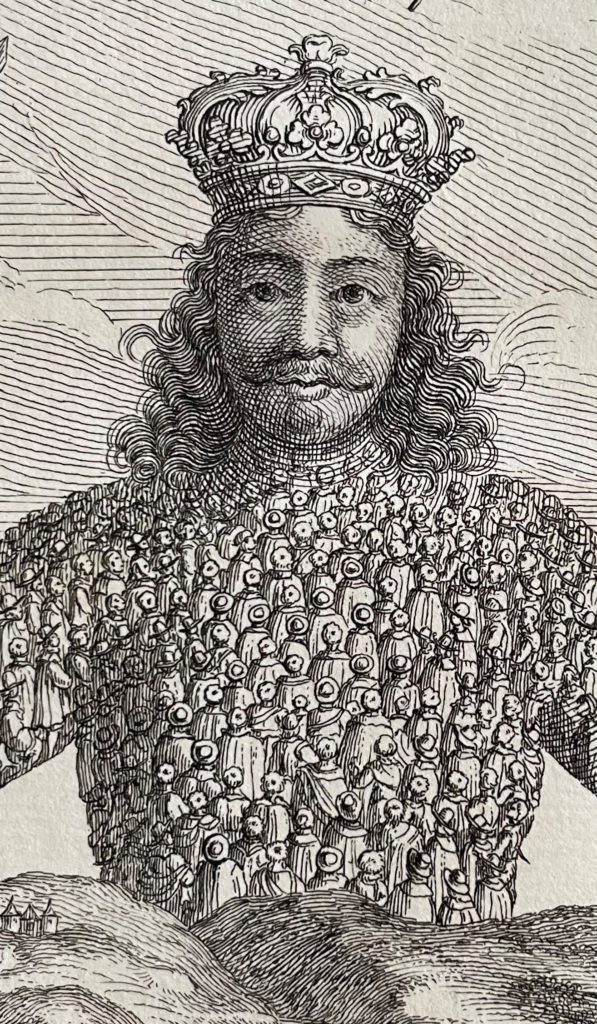
Once we begin thinking about identity in this mutually recursive relationship between consolidation (both inwardly and outwardly) and the fluctuating, stimulating yet untameable nature of our mind-bodies (we are not machines after all), we can transition to a potentially more fruitful metaphor. I would propose to shift from the highly capable juggler on a boat, eternally trapped in a fickle sea, to one of an inner kingdom3.
We all contain multitudes
The potential of our identities
The past and present wilt—I have fill’d them, emptied them. And proceed to fill my next fold of the future.
Do I contradict myself? Very well then I contradict myself, (I am large, I contain multitudes.)
Walt Whitman, Song of Myself, 1892
I am repurposing this particular section of Whitman’s poem with my alternative interpretation.
When it comes to identity-making (and, in equal measure, discovery), the multitudes that we contain are nothing else than the vast crowd of elements that lie immanent in ourselves, and that we channel to the outer-world through our identities4. This aggregate of undefined elements constitutes our ‘potential’, whereby we perpetually sense that we are much more than what our daily being in the world manifests (both to ourselves and to everything and everyone else). The multitudes are this inner reservoir that nourishes our development in the world, that provides a vague direction, preferences, an ‘essence’. They are those aspects of ourselves that we cannot change, and that if we follow them they provide a sense of fulfilment unlike anything else. They are the multitudes of manifold elements, ranging from abstract to concrete. They can be images, desires, inclinations, memories, archetypes, theories, conceptions of our relations with others, concepts. They can be anything as long as they come from oneself and one’s individual unfolding in the world.
We might call the aggregate of these multitudes aspirations, vocations, passions and what not, but these terms merely address a thin layer of what they are. No words adequately convey their essence. It is impossible to capture them in words because words, by definition, operate through convention. The implication is that language is designed to speak about shared conceptions, not the utterly messy, profoundly complex, unique concoctions that conform individual characteristics.
These conventional terms are attempts to give form to the multitudes, to translate them into the world through pre-established frameworks. So, in practice, we may try to give some form to these elements through a term like ‘passion’. Then we take a look at the inventory of ‘passions’ from which people typically select in order to articulate their ‘passion’ (both to themselves and to others). These items may include names of professions, artistic disciplines, particular subjects, hobbies, sports or other recreational activities, types of entertainment and other forms of cultural consumption, intellectual domains and other categories. We gravitate toward existing methods of translating some of our multitudes through conventions because the alternative process is much more arduous: we need to explore and gradually occupy territory for our kingdom. Yet the items from these pre-established inventories rarely provide the pure and endlessly invigorating, meaning-generating radiance of giving form and endurance to true manifestations of our individual essence. And no instruction manuals exist for doing so the easy way. Instead, we need to go through the consolidation of our domains.
So managing these multitudes within us remains a labyrinthine process. We might try to manifest fragments of their totality by concentrating on some portion that overlaps with the passion ‘travelling’ and the aspiration ‘opening a bookstore’, but these represent only small settlements, habitable territories within our inner kingdoms. They form limited areas where segments of our inner multitudes can rest and find some quotidian predictability.
This process of staking claims on areas where our inner multitudes can settle is no more than the crystallisation of our identity in the world. We seek methods to express (channel outwardly) who we are by allowing our inner multitudes -all those ideas that resonate, all those impressions that are purely ours, all those conclusions about how we could have behaved better, all those images, conceptualisations of things that we develop in ways that are coherent with our unfolding into the world- to explore uncharted territories and discover fertile regions to map and/or occupy.
Then, like every thriving kingdom, we construct roads and infrastructure, so that we enable an easy return to these fertile areas next time5. And we develop settlements, erect scaffoldings, structures, signposts, runways and sustenance systems, all designed to shore us up so we can excavate deeper, uncover the real gems in these areas, and refine raw resources into more precious creations. Meanwhile, by anchoring, crystallising, and consolidating, we are hampering the progress of entropy, whereby our progress could be reverted due to our limitations as a single organic individual.
Territories and fertile areas of the self
Discovering and mining the self

Just as I described what I mean by inner multitudes, I will also explain what I mean by territories and fertile areas. The territories into which we launch our troops are the invisible and visible worlds, namely, the domains of symbols and ideas and the world of other people and things. They represent all of the latent meaning in the world, waiting to be discovered and nurtured. They are the bounds of one’s own curiosity and resiliency as we venture to see more of the world in every sense, to learn about it. In other words, the territory metaphor reflects our active engagement with the world, our troops being commanded by our distinctive way of experiencing and thinking it. A territory becomes occupied by our troops when we engage in the world in a way that is properly ours. The banners, language, style of politics, culture of these multitudes as they spread on the territory metaphorically constitute our own singular individuality.
Fertile areas are those parts that are especially resonant, that make sense to us on multiple levels. Typically, they involve intrinsic interests and pleasures, things that energise us and satisfy us, that we enjoy without expecting external rewards. They may also include things in the world that are especially resonant with who we know we really are beyond our persona (etymologically: our social mask). These areas represent what instinctively yet momentarily persuade us that the social order that we navigate is akin to a theatre play. A fine play indeed, but one that unfolds against a flat backdrop built upon a flat stage, all framed by the luxuriant background of all that life has to offer beyond the audience seating.
We desire to hold on to these fertile places. We want to cultivate them, dig further, transform them into paradise, both for ourselves and any potential visitors. We want our troops comfortable and readily connected to the rest of the kingdom for sustenance and motivation to continue their mission. We want more of our multitudes to flow into them effortlessly, allowing the settlement to expand and become richer. The settlement needs to fulfil itself, to become a paragon: a renowned and special place.
And naturally, the roads, infrastructure and other structuring and anchoring elements are none other than our methods of countering entropy-induced oblivion. We create durable things: objects, texts, stories, concepts, art, enterprises, communities. We acquire and arrange things in durable, ordered configurations: curation of culture, narratives (the arrangement of elements into a coherent, meaningful sequence), clothing, furnishings, decoration, and other objects. We leave our distinctive marks with our names printed on them: professional, personal or community achievements through our performance of a role we have chosen. And we strengthen relationships through a continuous advancement in our ability to be known better and to know the other better.
Provided these activities have been discovered, claimed (occupied), and developed by our own multitudes, they all reinforce and strengthen our kingdoms. They expand our inner worlds and identities. And they allow our finite minds occasional respite, so that they can later return to develop them further, which means to improve the quality of life of our multitudes by providing them with more effective and reliable resources to freely circulate the kingdom with far fewer impediments (repetitive thinking, intrusive thoughts, distractions, lack of direction, poorly managed emotional turmoil, insufficient self-knowledge, unexamined habits of how we interpret the world around us). In this way, they can dedicate themselves to what really matters: making paradise out of the settlement, uncovering the gems within its depths.
Our kingdom
Tapping on our kingdom’s resources, burnishing its splendour
Occasionally, we strike gold in the promised land. We experience an epiphany, discover a vein, and we plant a flag on it. We open a mine and build a sanctuary alongside it. We develop increasingly superior tools to extract these resources further and uncover others. We install handles, handrails, support beams, ladders and ventilation systems. In this way, we can return and continue our work later, picking up from where we left off.
This produces an ever advancing process of self-understanding, excavating ever deeper as we set an infrastructure in place that allows periodic rest, and enables deeper exploration next time. A consequence of this is that our settlements and our preliminary attempts to set scaffolding and infrastructure will be rudimentary at best; our multitudes will lack smooth connections to the metropolis and other settlements, they will struggle to properly exploit the resources in the land. But that is no matter: eventually they will, as long as they do not abandon the mission altogether, allowing all of the infrastructure established so far to rot and degrade into ruin.
Once the kingdom becomes reasonably expansive and developed, a coherence in one’s identity emerges. The network of roads, settlements and resources grows increasingly condensed, integrated, and efficient. We recognise what each settlement stands for, and circulation among them becomes swift and fluid, no longer sputtering along endless points of friction. At this stage, we will have developed and strengthened a sense of an identity that is purely organic with our individual unfolding in the world. We will be large, we will contain multitudes, like Walt Whitman expresses in his poem, yet we will contradict yourself less and less.
This expansive mission essentially aims to explore, claim fertile territory, consolidate, and develop it. If the mission strays from this essential purpose, then we are abandoning this kingdom and attending other life matters, such as questions of social expectations, cultural games, communal needs and obligations, status pursuit, competition, service to others6, chores, more pressing real world concerns.
Certainly all of these processes intertwine at some points within the kingdom, but attending to them means we are not deliberately and exclusively working with the resources within it while combating the gradual decay of our identities through entropy. Instead, we are entering spaces where external forces test the endurance of our infrastructure and settled multitudes.
And outcomes may vary: these external forces may gradually make us forget who we are, with the extreme case being an identity so weakened that we will be crawling through unsure terrain, desperately clutching at anything in the world of conventions that might accommodate even a tiny bit of our multitudes (and under suboptimal conditions). We will cling to such arrangements merely to maintain some functionality to survive and at occasionally obtain a modicum of fulfilment through the life events that the world of conventions insists in funnelling us through.
Alternatively, it is not impossible that these challenges might positively reinforce our identities. We are obtaining feedback from the hard tests of reality, which can be a priceless source of lessons (after all, our identities constitute some of our main sources of personal solidity in our engagement with the external world).
First benefit: sturdy workstations for resuming work
“Workstations in the deepest galleries of our inner resources” – setting up a solid camp to maintain the painstakingly progress achieved so far
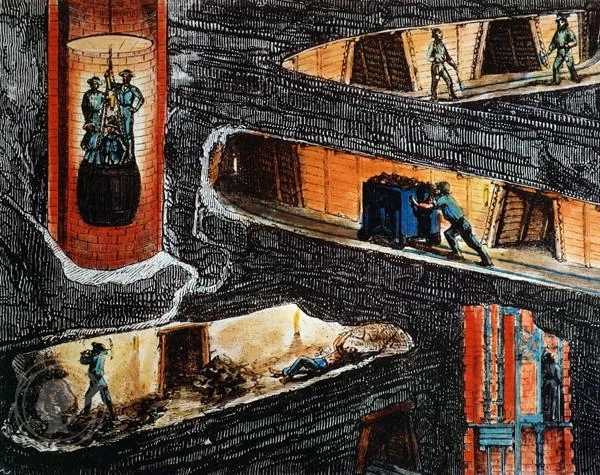
When understood as advancing this mission to provide our multitudes a better place to live, every effort at consolidation will simultaneously serve us in the external world. As these elements become consolidated, we create possibilities to share them with others: we can tell others who we are and point them directly towards pathways for them to further explore our kingdom. We can even use all these settlements to enhance our memory of who we are. During moments when we return to the juggling atop the tormented boat, we can think back to our settlements, look at them as concrete evidence of our being.
Even more, in many cases others can access these settlements without any action from our part: our reputations precede us, our writings remain available for them, our projects, creations, acts carry our names, etc. In sum, what is consolidated serves multiple purposes. They are a concrete reminder of who we are to ourselves. They generate growing coherence between the disparate components of our identity7. They stand spread both in the visible and invisible world (respectively, of objects and ideas) as shareable, witnessable, explorable testimonies to our identities, as well as launching points for further exploration and development of our identities.
Lastly, they work as a multimodal vocabulary of who we are; they offer a larger repertoire of discernible and intelligible elements (in any form: from words to objects) that can be used to speak about our identity. Given our intimate familiarity with our kingdom, we can communicate its components more easily. As a result, the quantity of consolidated elements, of anchors, scaffolding and so on, that we establish increases their effectiveness in buttressing us for further exploration. We can talk about it with others, receive feedback, be recognised through the gazes of others. A consistent engagement with the external world, combined with an organic intertwining with it, is fundamental for the development of a prosperous kingdom (otherwise we risk retreating into solipsism).
Second benefit: facilitating human connection and mutual development
”Human connection – mimesis” – the elements of our crystallised identity are rest areas for others uncovering their own.
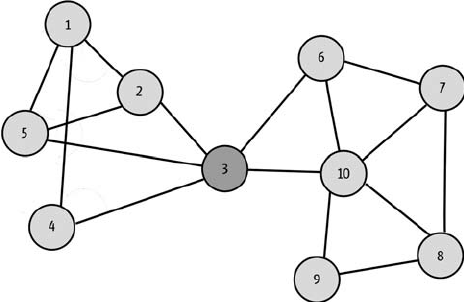
Another benefit of nurturing our multitudes within our kingdom is that this process can assist other people in exploring their own. Others on this same mission can access particular settlements of our kingdom to latch them onto some element that resonates with their own identities. In turn, they use these elements as initial strongholds of solidity and certainty (at least about some part of their identities, a prime example being the imitation of an idol’s demeanour) to mobilise their own multitudes into their own territories.
They can use them as consolidated foundations for their own journeys of identity extension. This is why it is no zero-sum game whatsoever. Everyone benefits. Hence why a military metaphor might not be the best choice; we are neither occupying, nor exploiting in ways harmful to others.
The result is that part of our kingdom becomes a “safe space” for others with a few similar affinities to rely on some initial, solid footing to venture into expanding their own. This process resembles how a fragile identity will fasten itself into already existing conventions to give its own multitudes an at least minimally viable existence. The difference is that our own consolidated settlements serve as more complex ”conventions” than ones belonging to general culture. This is because our “conventions” evolve from individual experience (I call them conventions because they have become identifiable, shareable, communicable enough to serve a similar function, albeit with a much smaller amount of adherents. Nonetheless, I think the proper, albeit a bit too technical-sounding, term would be consolidations, or identity extension). Conversely, general cultural conventions emerge to accommodate as many people as possible, regardless of their differences, as they must do so to be effective in maintaining societal harmony.
Yet, beyond broader general culture, a series of smaller, ideal communities can develop through this process: through the growth of a web of personal kingdoms overlapping via particular settlements (i.e., consolidated affinities).
Third benefit: actualising our naked self
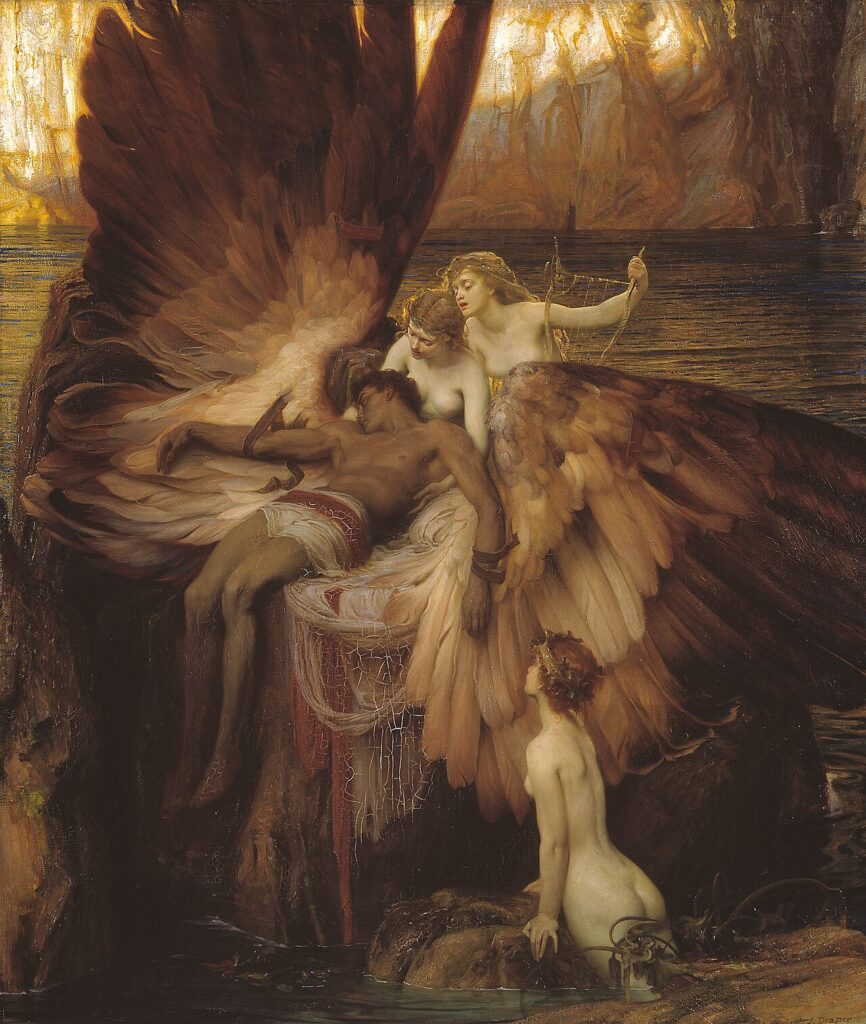
“Beeswax might melt and our wings fall apart, but we have seen the land from above, warmed by the sun” – doing away with the technology once we did the work
Of course technology, particularly digital technology, plays a big role in this. Technology facilitates many of these consolidations, because it is made to execute specific processes reliably in order to address problems responsive to these processes. It is reliable and durable, smoothening out many cumbersome procedures along the way, which lightens the burden of our limited mind-bodies. Technology primarily serves as a facilitator, another tool in the kingdom’s own stockpile. When it comes to the digital, it has this particularity that it is lighting fast and infinitely replicable, which also renders it indestructible in a way (as long as there is energy and infrastructure to power it).
Conversely, it can be instantly erased, stolen, become inaccessible, or fall under others’ ownership with the same speed and control at a distance. It also has the characteristic of being immaterial and inaccessible without interfaces. All things considered -both advantages and limitations- these technologies serve as powerful facilitators for deepening and extending our identities, and we are fortunate to have many of them freely at our disposal in this day and age.
A complexity emerges when combining identity with its durable external extensions: what we would be without these extensions. Would we exist merely as a set of severely constrained potentialities, unable to be manifested or uncovered due to a lack resources to sustain them against the twists and turns of our organic minds experiencing the world?
I think that this is indeed the case. We will not get as far without an impulse to extend our identities and methods to do so durably. We can learn lessons, acquire skills, develop our character and bodies, but this encompasses only a part of what we can be. Without means to consolidate our progress of self-discovery and projection into the world, we cannot hold all this growth within our minds, unless we are extremely lucky, and we miraculously find efficient ways to do so consistently.
The good news is that we evolve alongside the development of these extensions. Once we have established and developed our kingdom, we are no longer the same: we have updated ourselves in our standalone mind-body (when deprived of all external identity supports) in response to the gradual evolution of this process, and the feedback and insights into our souls that its outcomes provide.
Consider the example of a person living in a fairly conservative environment who chooses to shave their head and dye it bright pink to explore their relationship with the world through this more provocative facet of their selves. Once they grow their hair back to its natural colour and keep it that way, they will have learned something from this experiment, perhaps discovering they can handle this boldness that they always felt they had in themselves.
Such a discovery of one’s courage lays bare new territories to explore, new possibilities that were previously dismissed because the requisite courage to even conceive them was presumed to be absent. This happens but at a much larger scale when engaging in the kingdom-making process. We might lose certain areas of our identity extensions; they might become outdated as we shed our old skins throughout the process. But this evolution is only natural. We have become emancipated from them, like a decaying kingdom retaining the wisdom and sophistication of its culture8, reflected in every aspect of its population’s daily existence. We can navigate the world as a more fulfilling version of ourselves, while we ready ourselves to begin the process anew, in its next cycle.
Do we have an inescapable essence?
“Real-isation both inwardly and outwardly” – are we born with something that is essential and unchanging?
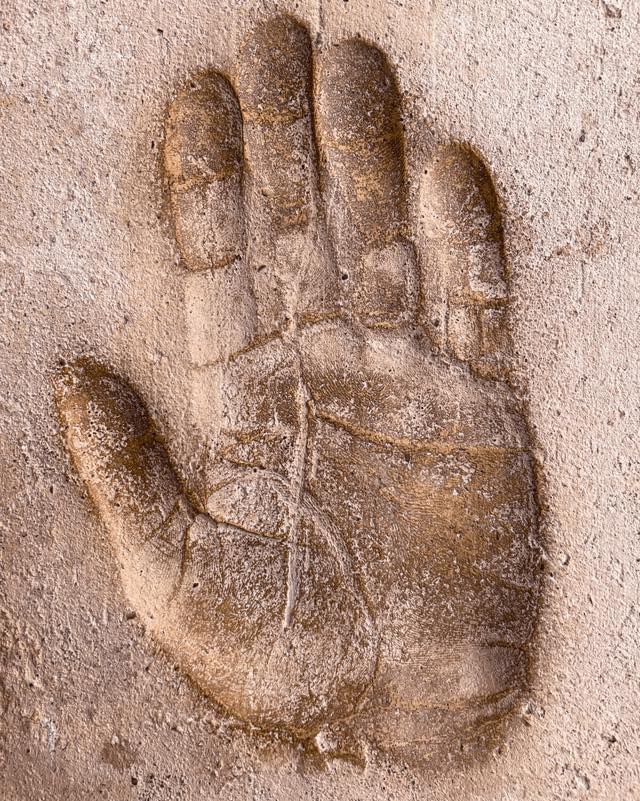
What is that essence that defines the kind of multitudes we contain? That inner drive -that compass- that knows when to tell us that something we are doing, at its most elemental level, feels right while something else does not? What is that source of a particular, incomparable sense of fulfilment and enthusiasm9 that renders life all the more worth living and sharing with others?
I feel there exists a formless source of primordial energy within us. For reasons perhaps evolutionary, culturally developed, determined during infancy, or maybe a combination of all these influences, it is born with a form unique to each human being. It is an energy that is just that: energy. It doesn’t really harbour any particular content that we can describe, yet it shapes the forces driving us to lust for life and flourish, to continue making the most out of the world. All we can know is that it pushes us in some directions rather than others, regardless of our conscious responses to these impulses.
All artefacts of culture (both material and immaterial) serve as channels through which this energy finds expression, just as I described regarding how we select our passions from a list of socially sanctioned items. This is a way in which culture gives us the means to mediate part of this energy through something that is supposedly socially sustainable, and that we do not have to painstakingly develop ourselves. It can also be viewed as a collection of enduring departure points for people to claim their own kingdom.
However, these channels are imperfect; what culture in its default state puts at our disposal during our daily dealings is not enough for us to achieve an authentic flourishing. Nonetheless, whatever their strengths and weaknesses, cultural elements are conduits through which people’s primordial energies can interface with the world. They are like catalogues of pre-made holes, each with their own characteristics, through which parts of this nebulous energy can cross into the outer world. In the worse case, we might confound these items for our primordial energy, thinking that we are all the way down to our essence whatever stark definitions culturally conventional terms are designed encapsulate, and allow this to dictate every aspect of our being.
Our inner multitudes represent diverse expressions of this energy generated through our experiences with the world. If playing an instrument for a crowd is compatible (resonant, reactive) with some part of this energy, then the energy will generate multitudes of ideas, desires, impressions, concepts and such that relate to music. Because all these elements are the best suited for satisfying this energy’s demands.
Then, as we begin to discover and understand what these multitudes are, we face a choice. We may choose inactivity, confining these multitudes to stifling lives, huddled up in cramped spaces in a diminished, decrepit kingdom lacking any means for smooth circulation so that they can breathe and expand. Alternatively, we can choose to guide them in their mission to explore and settle somewhere fertile, enabling our primordial energy to manifest in better, more powerful, more discernible, more intelligible, and ultimately more fulfilling ways.
Our intertwining with the world
“Like ivy” – spreading out into the world while respecting it.

Musician Luis Alberto Spinetta expressed this mission in an elegant way:
“Human beings have a big problem, which is our egomania. It is a very foolish idea, and it is not only about the “self” of psychoanalysis. It is a question of the energy that one possesses, and how we establish a connection with it in a way that allows us to live not only happily, but also having great respect for all that surrounds us.”
This energy is always present, whether we establish highly conductive connections with it or not. If we fail to do so, the energy might work against us, hindering our chances of living more happily while having great respect for what surrounds us.
Maybe this is a fundamental part of being human. As we evolved through the aeons, we have grown to become -to contain– too much for our bodily limitations. Our inner worlds want to become real, or better said: realised. They want to be born, acknowledged and paid attention to. They want to brim over, tumble out into the world. So we structure the world (both the invisible and the visible, with our cultures, objects and arrangements) to allow ourselves to be who we are, to become what our bodies, minds and hearts are crying out for us to be, however much we attempt to repress their attempts. It is that primordial energy that insists upon manifesting in the world through the resonant elements we make available for it, so that we may witness it in its variegated manifested forms. Neither our minds, nor our bodies are made to bottle it all up!
- I chose the term ‘mind-body’ to signal that my belief that the mind is not an entity that transcends the body. Even if it feels like all perceptive and thinking processes take place in our minds, we are doing so in an embodied manner. ↩︎
- Sometimes what remains consistent is parts of us that do not reflect what lies deepest in us. They are products of learned ways of interpreting and reacting to the world, handed down by cultural modes/recipes, and a sheer incapability (or lack of effort, or inability to point out exactly what the problem is) to do better. It is an incapability to find the right channels for our authentic selves. Wanting to be is not the same as learning to be ↩︎
- There are always alternative metaphors to war related metaphors. Perhaps because this metaphor came in a moment of inspiration and fits in perfectly, and I do not want to continue looking for another one, I will keep it. I will clarify though that it is an ideal, peaceful kingdom which expands its territories through diplomatic missions in a non-imperialistic way. ↩︎
- Identity comes from the Latin identitas, which translates to ‘sameness’. I interpret it as that sameness that make us who we are across time. What repeats itself continuously about us. It carries a sense of consistency across time, which makes it discernible to us and to others. ↩︎
- We are finding and founding our very own Macondo, the magical fictional town from 100 Hundred Years of Solitude, which grows from a small settlement with no contact with the world, founded by a group of exiles in a never before explored terrain, into a prosperous, well-known town. ↩︎
- Although an individuated person can certainly provide better service to others ↩︎
- They are disparate in so far that modern society is built over the premise that we need to separate them into precisely defined, distinct compartments ↩︎
- Hellenistic Greece under Roman occupation comes to mind. ↩︎
- Enthusiasm comes from Ancient Greek, it is based on the word theos, which translated to “god”. It conveyed the idea of being possessed by the gods, owing to the mysterious source of these moments of the temperament. It is a source that sometimes seems unending, of an energy that we did not know we were capable of having. I like to think that some used to think that perhaps it was an energy from the gods. ↩︎
Leave a Reply