
When we couldn’t speak our minds but could see gods in nature.
Table of Contents
- When we identified "gods" before the maturation of a language of abstractions
- Our perception of invisible "gods" in the mists of pre-linguistic times
- Gods as common threads across seemingly disparate domains
- The influence of each divine domain’s particular blend on our engagement with its constituent elements
- The borrowing of the vocabulary of human affairs for the description of divine behaviour
- The flourishing of rationality, philosophy and modernity as gods appear increasingly human
- Coda: "I find myself compelled to reason, but I prefer to dream.”
When we identified “gods” before the maturation of a language of abstractions
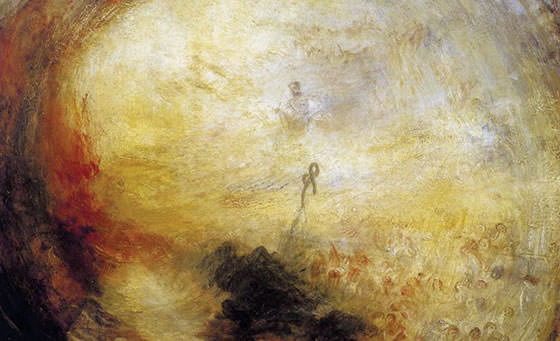
I like to think that one of the many factors behind the origins of pantheons was a lack of vocabulary.
In times when languages were in their primitive state, we hadn’t yet engaged in discussions about creating abstractions. We hadn’t done so enough to have at our disposal an immense pool of concepts that we could comprehensively communicate to each other. We hadn’t yet developed writing systems that would enable the more precise transmission of knowledge across generations, while allowing this pool of available vocabulary to grow through time, building from shoulders upon shoulders the giants of earlier generations.
Did we have words for concepts like “hypothesis,” “leverage,” “theory,” “jurisprudence,” or other such abstractions? We certainly might have applied or practiced some of what these concepts have come to signify. Yet, we didn’t have words that defined them with precision, not when language was at its most utilitarian, mostly populated by concrete vocabulary such as actions -grab, throw, run- and empirical phenomena -rain, seasons, emotions.
And this linguistic insufficiency resulted in a lack of concepts for us to organise our experience of the world: how do we interpret an experience such as what we today would call “trauma” or “anxiety,” and think about it, if we don’t have the concept to turn it into a tangible, organised idea in our minds? It’s likely that we didn’t think about it as a possible mainstay of the human condition, something that we could abstract from individual cases as some definable pattern that anyone may experience. Rather, we simply thought about each particular case in its uniqueness, without realising its consistent resemblance to other cases.
Our perception of invisible “gods” in the mists of pre-linguistic times

But I am talking about a much earlier period. I am talking about immemorial times, of the dawn of language itself, when we needed to refer to things or explain them with an extremely narrow set of available words.
I imagine primitive groups of people in some Mediterranean region who would look at thunder and say “that’s Zeus”. We would point to cereals sprouting from the earth and say “Demeter”. They would marvel at the way some sounds vibrate together in a pleasant, clean way, and call that harmony “Apollo”.
The intellectual exercise to understand this is straightforward: imagine having only dozens of words to refer to and describe things you see in the world. In such circumstances, many of these would be names of gods, which at that moment in time primarily designated particular invisible forces in the world that made things happen -invisible phenomena like the movement of stars, the blossoming of flowers, the generation of fire, rainfall, wind, illness. Evidently, at this point “gods” weren’t yet represented as anthropomorphic beings or personalities in any kind of human way. They were rather an expression of our raw, disorganised yet impossibly dense relation with the universe.
Here is the exercise: how would you group these phenomena in order to be able to refer to all of them only with these few words? Would you unite them according to some kind of specific resemblance, a perceived “Zeusness” that they all share? But how would you have defined such an essence? Since at that time we didn’t think so much in terms of abstractions, our definition of “Zeusness” would have been fluid rather than rigidly defined. And how exactly an early Mediterranean person would have experienced this particular impression or feeling of “Zeusness” when witnessing something might remain forever mysterious to us -we who inhabit a completely different world, one filtered through the premises of modern culture, scientific understand, and the simulacra of mediated communication.
I would imagine that this experience of “Zeusness” evoked for example feelings of authority and power, feelings like the gaze of a father who is infinitely great. It evoked the notion of a certain order of things that always triumphs in the end, such as the idea of justice, and of things ultimately making sense in the big scheme of things. “Zeusness” could indeed be an impression existing somewhere between a common essential element and what we today would call a “vibe”.
As I imagine it, these gods would have been regarded as the singular prime movers of all things within their domain. They would have been the fundamental sources of those invisible forces that made things happen, animating the world.
Gods as common threads across seemingly disparate domains

What I find fascinating about this scenario is how these early people would ascribe the same prime mover to things that in our modern point of view would seem disparate : they would mediate between conflicting parties and decide that one deserved compensation and the other merited punishment. What we now call Justice, they would call “Zeus”. Justice was indeed another quality of “Zeus”. A modern equivalent would be pointing at an assembling machine and saying “That’s engineering”, and then looking at a plane’s turbine and declaring “That’s also engineering”. For both of them, engineering is the underlying principle that makes their existence possible.
Moreover, this prime mover begins to blend these elements into increasingly complex ideas. At some point it made sense to these early people that what happened with the sky and the weather, with rain and thunder, was somehow essentially related to justice and law. These were qualities of the same larger, overarching force. They were all interconnected by some commonality which, in these people’s understanding of things, only this idea of “Zeus” could adequately convey.
Zeus is also “Zeus Xenios”, god of hospitality and protector of guests. So, in the universe of all things “Zeus”, hospitality and the protection of guests somehow emerged from -or alongside- the relationship of sky and weather with justice, law, and order (and perhaps other attributes of “Zeus” such as sovereignty or the fulfilment of oaths). Thus, the idea of hospitality was included as something that also sprung from that essential originator “Zeus”.
The influence of each divine domain’s particular blend on our engagement with its constituent elements
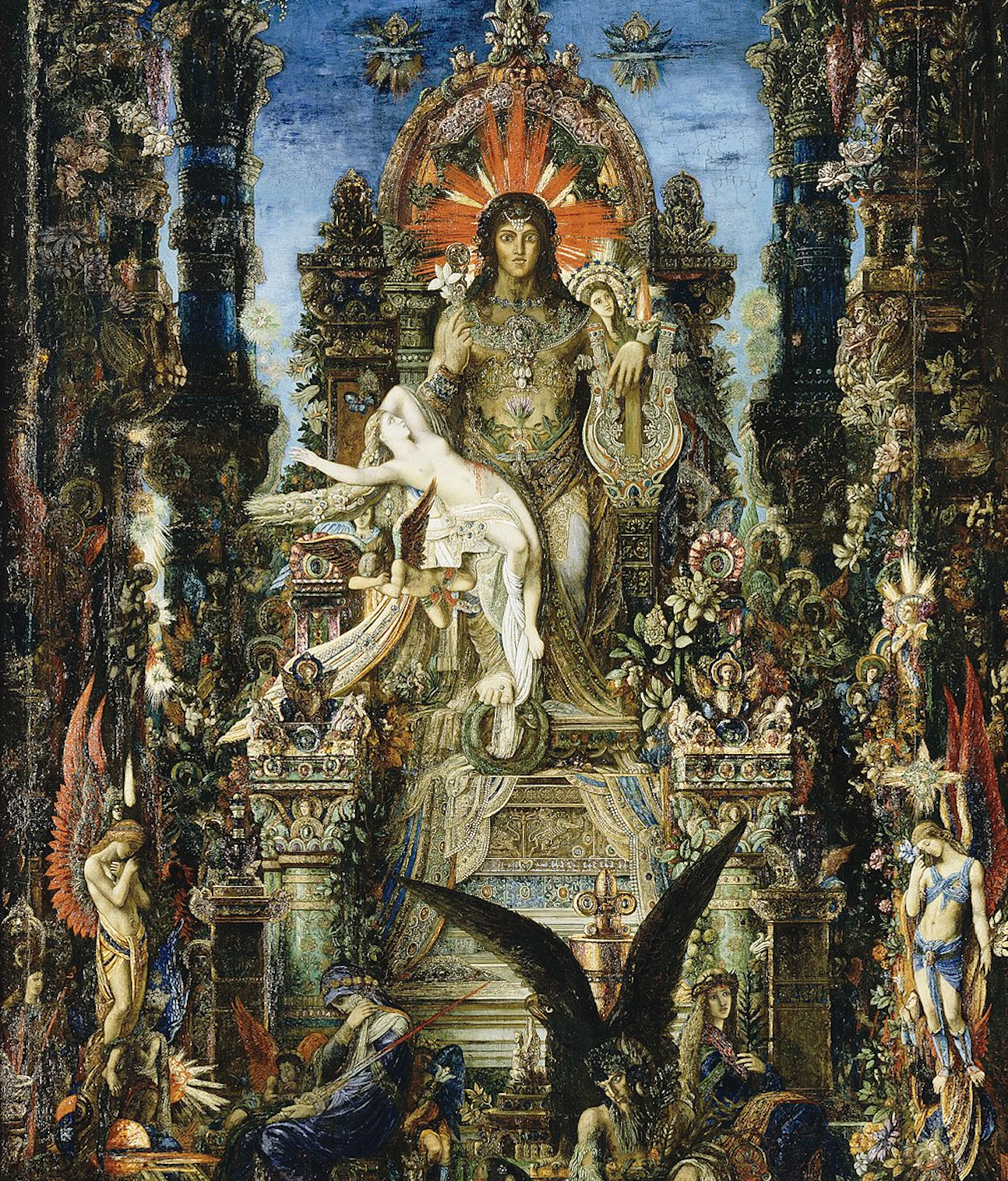
It’s difficult to imagine exactly what the implications of this interlacing of things under a common thread meant. After all, this process was guided by an experiencing of the world, an ordering of meaning utterly alien to us modern people. Perhaps these early cultures didn’t consciously establish any clear relation between what happened in the sky and the pragmatic value of agreeing upon common rules for a peaceful coexistence -that is, establishing laws. Yet, these relationships between all things “Zeus” would certainly have conditioned how people thought about them. In any reflection about these elements, whether in simple spontaneous talk or in more organised official debate, there would always remain traces of the underlying connections between these elements: hospitality, justice, sky, oaths, sovereignty, and so on.
What’s more, it seems logical that the association between all things related to the sky and weather with a single entity “Zeus” predated discussions about the establishment of laws by a long time. Nonetheless, there must have been a reason why early people would have made this connection once they attempted to explain how the idea of “Laws” fit in the cosmic order of a world that remained largely mysterious to their greatly limited existences (at least in the sense of means for transport, communication, transmission of knowledge, and both technologies and techniques to ease daily labour). Instead of placing law and justice under Apollo’s domain -which would have triggered associations with light, harmony, music, poetry, rationality, healing, foresight, and so on- they positioned them under Zeus, locating them in a distinctly different place within the hierarchy of the order of things and their interrelations (cosmos). Zeus, after all, is Apollo’s father and the supreme authority among all Olympian gods.
All these invisible forces were interconnected somehow. Before we established that abstractions could exist independently and deserve single words to expressed them -words with a precise definition-, before we had developed distinct concepts and clear separations between abstractions like ‘justice’ and ‘hospitality’, and between natural phenomena, we gave these forces names and developed rituals and attitudes towards them that were always present in our daily dealings. The way invisible forces governed the sky’s rhythms of change constantly reminded us that justice’s own particular patterns also belonged to this ever-present invisible source, this “Zeusness”. And through our rituals, we contemplated our role within these greater currents of the cosmos upon which the “Zeus” force had such profound potency.
We left votive offerings -small objects that we thoughtfully selected to be relinquished. We organised moments of collective contemplation through sacrificial rituals, through the construction of enduring, symbol-laden, meticulously designed temples and sanctuaries, and through the composition of prayers, dances, music, verse dedicated to these forces. And in this process, as our vocabulary expanded and our initial art of telling anecdotes, gossip, and stories became increasingly evocative, detailed, emotive, and full of resonance with our common psychological experience of the world, we began to talk about these forces by borrowing from the vocabulary of these stories. We filled the gaps in our lexicon for explaining these invisible forces with that of our penetrating descriptions and explanations of human affairs. After all, few forms of complex discourse (words organised into larger bodies of meaning rich with precision and nuance in details) are more readily transmitted and stamped into common language than powerful human stories.
The borrowing of the vocabulary of human affairs for the description of divine behaviour

A great testament to this transmutation of the enchanting mysteries of cosmic forces into human affairs are myths and literary works such as Homer’s epics. As we began to explain more phenomena in increasingly intricate ways, we borrowed from the vocabulary of human affairs -something familiar, of our own, much easier to talk about than the laws of physics- to articulate these dynamics. The principle of such transmutation closely resembles that of the metaphor: a metaphor (also symbols1 and analogies) unites seemingly unconnected things through a common mechanism, a principle that animates them in the same way. Similarly, fire was not discovered but stolen by Prometheus (meaning “Fore-thinker” in Ancient Greek) from these cosmic forces, and plagues weren’t transmitted or incubated, but they were arrows shot from the bow of a wrathful Apollo.
Did this exercise in transmutation perhaps evolve into an excessive humanisation of the divine, turning these explanations into what we now call mythologies? It’s possible that this occurred as generations passed across centuries, even millennia, and these initial exercises in unifying phenomena under these common words became too complex. As it could have happened, the extensive use of vocabulary related to human affairs could’ve led to a murky confluence of cosmic explanations with the conception of almost literally human-like divinities. After all, what better way to explain the apparent fickleness of natural phenomena than as being a matter of choices made by the invisible forces that govern them, driven by some particular motivation? And what being in the world demonstrates more fickleness and variability in the expanse of their potential choices -and their motivations- than humans?
The flourishing of rationality, philosophy and modernity as gods appear increasingly human

At the same time, as myths evolved into a space where cosmic forces could speak with humans, even procreate with them, more specialised vocabularies for explaining the world were emerging -for example through philosophy, mathematics, and astronomy- using terminologies distinct from that of human affairs. With this parallel development, the purpose of myth to explain the world became eclipsed both by its increasingly prominent role as allegory to cultivate wisdom, and by the perceived greater precision of these other specialised explanations that did not overlap with the vocabulary of human affairs.
Today, the separation between nature and humanity, between subject and object, is complete, and thanks to our doubling down on this bet, we have such miracles as the current state of science and technology, and all of the other direct and indirect products of rational thought. Nonetheless, we have lost much of that dense interlacing of meanings, that intimate relation with the world that we once possessed when we looked at it in the bigger picture -as if it were inconceivable to isolate the sociology of hospitality from the physics of thunderstorms. When do isolate them, thunder becomes merely an acoustic shockwave created by lightning.
Yet, by considering this acoustic explanation as the primary objective truth concerning thunder, we are depriving it of a larger expanse of meaning that the idea of this “Zeus” force would have better evoked. A simple example of this limitation is how we cannot relate to thunder as we would to Zeus, venerating it as an expression of a larger order of things (a cosmic order) that merits the dignity of what we today would call a “Greek god”. This larger force is what we would have taken the time to collectively contemplate through ritual and gesture, an opportunity to reconnect (etymologically speaking, the word re-ligion means reconnection, or to “bind again”) with our place in this perpetual flux of forces that animate the world and universe, forces that far transcend our daily preoccupations. These modern concerns are a kind of exercise in isolation: we isolate the variables of what ‘life in society’ means in a similar way as we have isolated what ‘thunder’ is, and this practice inevitably distances us from the act of reconnection with the cosmos, of “re-ligion”
Coda: “I find myself compelled to reason, but I prefer to dream.”
Quote by Jorge Luis Borges.
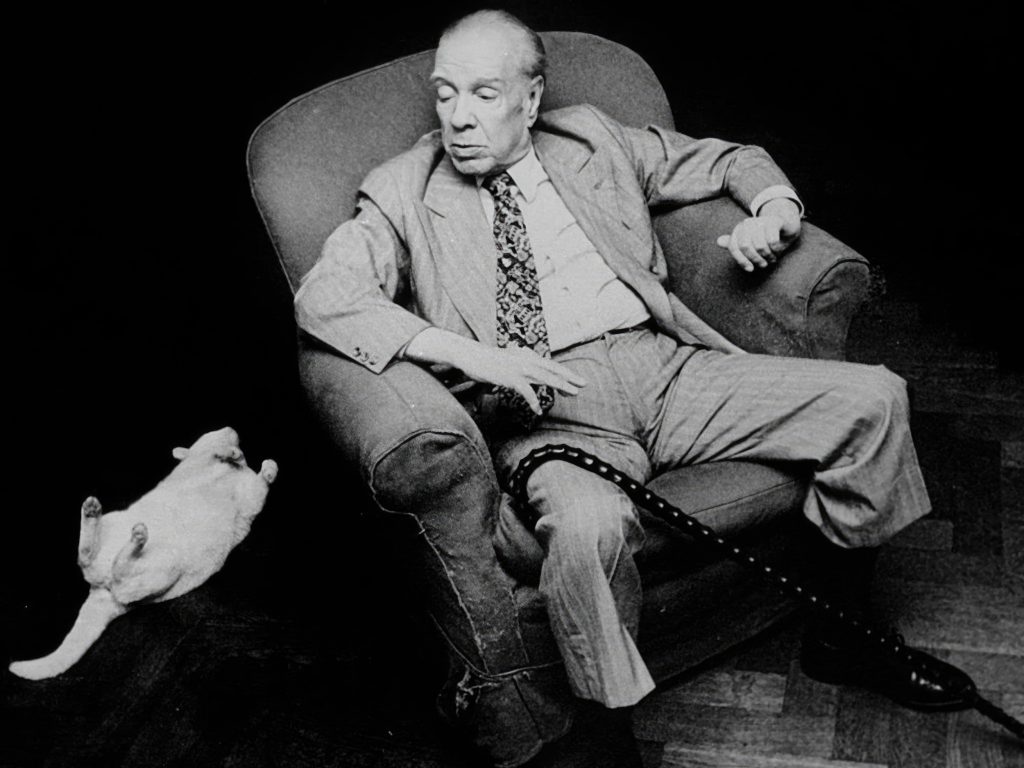
But this is also just a story. It is the exploration of a vivid dream, an exercise in rational fantasy, like one of Calvino’s Invisible Cities. It is not based on facts, but imagination and a certain intuitive rationality, led through an unexpected turn in the road. It is meant to provoke thought and spark connections in the reader’s mind, so that they can look at our relation with these early religions as something more than mere superstitious, outdated explanations of things.

- Symbol comes from the Greek Sumbolon which means to cast two things together. It is an act of unifying two things through the creation of a symbol. ↩︎
Leave a Reply