A value unearther is the person who sees value in something hidden. It is not always invisible value hiding in plain sight, in something already seen by everyone. Sometimes, it is value in things that no one sees; it is the value in particular details, or in things not yet defined nor fully materialised.
A value unearther says: why is it that nobody sees the value in this? Why is it that nobody does this or talks about this? I myself cannot ignore that it is extraordinary!
A value unearther pulls that unearthed mineral from invisibility and realises it is a seed. They cultivate it and set the soil for it. They claim a piece of real estate in the culture and they work that land. They build a magnificent temple among the growing garden; they turn the land into a sanctuary for others to visit.
Facilitating the incorporation of that value
A value unearther persuades others of the significance of this hidden value. They do not manipulate others in the sense of deluding them into thinking that something they know does not have value actually does have value. They are not interested in winning at the expense of others. They seek mutual benefit.
A value unearther creates systems that amplify this value. They build an ecosystem of ideas, concepts, objects, and interrelations that make this valuable thing ever more prominent, multiple, visible, convincing, and reaching more people —or, at least, the right people.
Since by definition they alone unearthed this valuable thing and championed it, nobody else will have explored it so thoroughly, and no one will have dedicated enough time and intellectual resources on it. So, they offer something that only they can deliver, because they built the systems, and they know them better than anyone.
Rewards for a role in society through that value
They grasp these systems so thoroughly that they represent an inexhaustible source of expansion for that value, as if they owned a unique lens that interprets anything in the world through that value, thereby generating new variations of it.
As a result of this building process —this possession of real estate in the culture, ownership of a unique lens, and unique familiarity with it— they will become sought after; others will willingly reward them for it, because they cannot dispense the valuable thing for everyone.
However, their capacity will remain limited. If others want them to perpetuate it as much as possible, the value unearther will need more time to do so. Hence, they will need financial means for self-sustenance, so they will charge a compensation for their time.
Then, as recognition of this value proliferates, their role in society will gradually consolidate. The whole economic system of transaction, supply, demand, and value calculations will respond to this role and compensate it appropriately, according to its relative worth. In other words, it will be assimilated by the economy.
The dilemma of delegation: we cannot do it alone, but will our skills atrophy?
There is a dilemma that haunts many of us in our search to expand the scope of our undertakings.
We wish for the mission we have conceived to materialise, as we slowly carve it into existence.
We strive to see our ideas spread their web across the material world to affect it in some capacity. And we want to remain faithful to them, hammer out for them the means for flourishing that we are convinced they deserve.
Yet, eventually we will face a sobering premonition. We will need to come to terms with the fact that one person alone cannot carry out this task —at least not in the depth it deserves— in one lifetime. We need to delegate tasks and decisions to others, hoping that they themselves will be as attuned to the mission as we are.
Thus, the dilemma is the following:
Do we ensure expansion by delegating work to others, while potentially diluting our mission’s integrity, losing sight of its unique spark?
Or do we trudge on alone through arduous work but with modest expansion, concentrating all of the upsides on ourselves while maintaining the mission’s full integrity?
This is the dilemma of cooperation. It is at the core of many decisions to start companies and other collaborative enterprises. From this dilemma, some choose the first option, whereas others opt for the second. In institutionalised terms, one represents companies, businesses and other organisations, while the other stands more closely to a conception of the artist-author.
Apart from the “mission’s integrity” (and many other factors, such as for instance available resources) there is another crucial variable that many take into account when pondering whether to delegate. When we delegate a collection of tasks that require the constant use of particular skills, we are running the risk of dulling our own edge in those skills. In other words, we might grow soft, atrophying our capacity to perform the tasks that we have delegated.
A simple example of this phenomenon of perceived skill atrophy is a sapping of our capacity for memorisation as we entrust the storing and retrieving of facts to search engines.
The AI band-aid for project managers lacking resources
The majority of us delegate a good deal of our tasks to machines. We allow their automated processes to carry them out in order to save us time and effort. Ideally, we allocate those savings to something we consider more important.
With the widespread adoption of agentic AI and its growing infiltration into most areas of human activity, many people who are not familiarised with the experience of management will become a project manager of sorts. In order to generate results with consistency and reliability, they will learn to coordinate these artificial employees so that their collective input amounts to the realisation of specific aims.
Consequentially, they will need to learn how to navigate similar dilemmas: what is their mission, the one that sustains this project? What represents that mission’s integrity? Is there a unique spark that they as founders need to continue fanning to keep alive? How much do they want to expand the project’s scope? And how are they going to address the possibility of many of their skills atrophying —or never even getting to learn to execute them in the first place— in the process?
Many who stop at this turning point and conclude that delegating is the best option for realising their project will be lacking the resources —e.g., financial capital, social capital, credentials, reputation, people managing skills— to hire or enrol collaborators or employees. Some of them inevitably will resort to these new technologies, because in some regards they can make up for many of the tasks that an employee or collaborator would normally fulfil.
Thus, if AI technologies can perform many tasks that human collaborators would otherwise do—sometimes faster and better, sometimes merely on an acceptable level, sometimes in ways that are just different— then this project’s founder could be tempted to delegate most tasks to it. She would effectively turn herself into a project manager that deals with giving directions, coordinating tasks and maintaining a broad view of the process, ensuring that the project does not derail from its mission.
As I see it, these are new working conditions that have suddenly become widely accessible. Within them coexist a risk and its mirror-image reward.
A virtuous cycle: mastery followed by automation and further learning
I think that in these new working conditions, the old risk of skill atrophy or avoidance (never attempting to understand the delegated activity in the first place) is more glaring than ever, but with a caveat in its potential rewards.
Ultimately, it becomes a personal choice between what you think would be valuable to learn from the workings of your own project —and use it as an opportunity to acquire skills by direct involvement with stakes and real feedback— and what you think is simply something that is not worth learning, because if someone —or something— will take care of it, then there is no issue.
The potential reward is that we may engage in a virtuous cycle of learning, while progressively automating processes from diverse areas involved in our project. We will be expanding the ambition of what is accomplished without losing our human agency in the process, as each automation will imply an increment in our own capacity to be more intimateengaged in the project, and steer it with ever-refining skill.
We would become the equivalent of an ideal manager. This manager delegates tasks but possesses the necessary knowledge and skills to step in upon necessity and resolve specific issues that are bewildering employees.
Thus, this is how the virtuous cycle unfolds:
We establish that a particular series of skilled activities are needed to move the project forward. We acquire knowledge about the essentials of that activity.
We learn how to perform the tasks that are relevant to our project.
Finally, we set up an automated system to perform these tasks.
What makes the cycle virtuous is that executing those tasks on a larger scale and over a longer timeframe will provide us with invaluable feedback for further polishing our understanding of the activity. Meanwhile, it will offer clues on how to improve the automated system. In this way, we will be repeating the process, our knowledge of the automated skill, and our ability to automate it in the context of a larger system becoming increasingly sophisticated.
It is important to clarify that when I speak of skills and systems, I am primarily speaking of knowledge work. In contrast, when it comes to the type of work that involves manipulating the physical world, the path is, obviously, less direct. Nevertheless, at the very least, our ability to coordinate, and learn more effectively, would experience improvement.
Certainly, we will not be able to learn absolutely all skills required; in some cases, we do not have the time to understand complex accountancy and graphic design. This is not a setback. It is rather an opportunity to practice sharp judgment in discerning which tasks are absolutely necessary for the mission and which are accessory. All that are accessory can wait, while we would do best to deeply familiarise ourselves (not only theoretically, but by doing it) with the fundaments of those which are essential to the mission.
Ultimately, we are not looking to become managers. Yes, along the way, we need to become good project managers: skilled, knowledgeable, and involved coordinators. Yet, the overarching intention is to materialise the mission we have conceived, which normally involves us engaging in that activity in which we find the most meaning, self-enrichment, and fulfilment. In simpler terms, we learn, we manage, we automate, and we learn to manage better and automate better, so that we can be rid of pesky tasks that very convincingly drain our time, effort, and emotional energy.
The underlying goal: emancipation from daunting starting points so we can create human community
And if materialising our mission by exercising a personally meaningful craft is the overarching intention, then the underlying goal —the undercurrent— is to create human community. We achieve this as we develop the tools, resources (remember: financial capital, social capital, credentials, reputation), self-knowledge, and the particular craft(s) through which we can channel our identity.
I believe that it is in human community that the greater path towards fulfilment (the one with the greatest increments) will open. It is a path that opens through finding our own clarity of mission, and discover a capacity for contribution, partnership, and collaboration that compels us to forge connections with others in, ideally, a peer capacity.
Thus, once we accumulate enough resources to collaborate with humans in a fruitful partnership, then the virtuous cycle of delegation takes on a qualitatively different nature. This is because we are no longer sacrificing human agency when delegating to a fellow collaborator. In fact, we are talking with our collaborators, communing, and learning from one another. And they, in turn, learn from us —always through a view extended over the entire spectrum of our humanity, not merely fixed upon our ability to execute one task area within the larger system.
By our “full humanity” I mean that in reality our lives are not neatly partitioned in “areas” such as our biology, our profession, our education, place of birth, family. Such categories are low effort conventions meant to be used as shortcuts to make sense of who is standing in front of us. What really takes place is that all “areas” of our lives and individual life stories blur, tangle and leak into each other, making a simple “skill” also an opportunity to share other sections of who we are. And in those additional parts, others might serendipitously find valuable threads they’d like to follow, explore, develop, and ultimately cultivate together. This, in my view, is a form of human connection framed by a collaborative context, involving humans well along their path to self-knowledge, true self-confrontation, and individuation.
What about the delegation of the skill of “writing”?
This entire reflection begs the question: what happens with the task of “writing”?
When do we know that we mastered the skill of “writing” enough that we can automate it and engage in the virtuous cycle that I outline above? And why does “writing” atrophy so easily?
Writing is never just “writing”. It isa form of self-exploration, diving into our realms of inner abstractions. It is learning to express its contents in different voices and tones, and exploring our own philosophy of communication. It is learning to wrestle with the chaos and order of our own minds. Writing is a way of stopping time within our imagination: as we transfer ever-flowing thought into word, we are in some way freezing a particular scene in our minds (or a particular representation of a scene in our minds, as some would object). Only we can do this, as part of our individual experiencing of the world, as beings with body and mind.
Writing, in this particular sense, is simply the arena where we continuously experiment with the adequacy of the language that we know —and sometimes that exists or is yet to exist— in freezing a scene of our minds with accuracy. Our minds are continuously evolving, and our abilities to articulate and communicate their updated contents sometimes lag behind.
This is one of the reasons why I think writing can atrophy so quickly. And the fact that engaging with our own minds is one of the most personal activities an individual can do makes delegating it for later automation almost inconceivable: we can never fully learn to wrestle with the constant flow of our imagination and our reasoning, let alone automate it.
As the reader might have gathered, I separated “writing” from writing because I see automatically generated writing as a different kind of activity. Indeed, “writing” is, in a sense, writing —at least as we used to think of it— and it does share with its twin the skilled employment of language to communicate knowledge. But now, as it happens when automated technologies take over activities that were formerly exclusively human, we get the opportunity to look deeper into what this particular activity actually means for us.
Here I am merely casting a spotlight upon some of these meanings: a private engagement with one’s individual mind, the fixed representation of a particular snapshot of its contents, and the wrestling match —the continuous experimentation— that takes place between our ever fluid, ever updating mind, and the language that is available to it as an imperfect (yet absolutely extraordinary, if words can, ironically, do justice to it) vehicle.
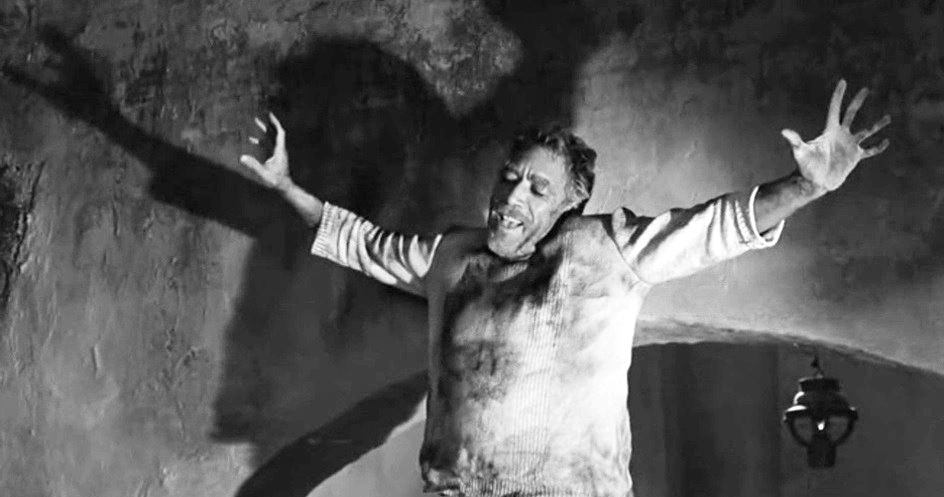
Zorba:it’s my santouri. Makes the best music. It goes with me, always.
Basil: It will be wonderful to get down and do some real work! Also, it will be very good for the village, which I understand is rather poor.
Zorba: we make everybody happy! Basil: and’ll we have fun too! We’ll swim… and we’ll drink wine. And you’ll play the santouri!
Zorba: [silence]
Basil:What’s the matter?
Zorba: it’s about the santouri. We make a bargain, or I cannot come:
in word, I am your man But in things like playing and singing I am my own
Basil: How do you mean?
Zorba: I mean free. You sign? Basil: I sign
From the film Zorba the Greek, 1964.
Communing with the immaterial entity “Music”
When the musician practices her instrument, she becomes emotionally engaged with the music of which the instrument is a conduit. The instrument serves as a medium to communicate (and commune) with that abstract geometry of sound we call music. A musician can practice her instrument, drawn forward by a desire to make the entity of music proud of them.
How does she make it proud ? By playing a piece well, by mastering a particular passage so it becomes instinctive and fluid like second nature, by orchestrating the elements that constitute music in a way that evokes something genuine on someone, even if the sole audience is the musician herself.
Intrinsic satisfaction is fuelled by the craft’s pride in us
Intrinsic satisfaction from an activity can be conceived as a desire to make whatever invisible thing that activity is meant to channel proud of you. You seek to delight it with your intervention, your contribution, your partnership with it. If you think about it, you are indeed providing music with a medium to materialise in the world and have an effect on it.
And that intimate relation that one gradually nurtures —by earning it— with that invisible thing can be an endless source of self-worth. We might never become one with it, fully merge with it, but together with it we can cultivate something that will dwell within us as second nature.
This musicality then courses through us both deliberately in our performance and peripherally in our daily life: serving as a tone-setter, a force of equilibrium for everything else we do in life. If we develop sufficient intimacy with a craft, it becomes a microcosm of our disposition toward living in the world.
The principles of a craft are the principles of harmony
Every principle governing the interplay between the components of this craft, and the possibilities latent within the injection of creativity between these boundaries, works toward achieving a harmony that is both rule-bound and limitless in its variability.
And the inner workings of this harmony function as metaphors for harmony in the visible world, because harmony itself is constituted of laws that transcend any categorisation of human endeavours. Thus, these principles can be extrapolated from a source of personal inner stability.
The musician makes music proud by communicating with it through her instrument. Perhaps music stands as the only entity that is proud of her at this moment, perhaps she has fallen short of the standards held by many the people around them. She might miss out on the rewards that these people’s pride would confer upon her, but she is undoubtedly receiving an immensely precious reward from a music that is proud of her.
“Discourse will indeed have the task of saying what is, but it will be nothing more than what it says.”
“One could say, in a sense, that ‘literature,’ as it constituted and designated itself at the threshold of the modern age, manifests the reappearance, where one did not expect it, of the living being of language.”
“In the modern age, literature is what compensates for (and not what confirms) the signifying function of language.”
Michel Foucault, The Order of Things, an Archeology of the Human Sciences, 1966.
Signifiers and signifieds: how do we relate words with things in the world?
“…butit will be nothing more than what it says.”
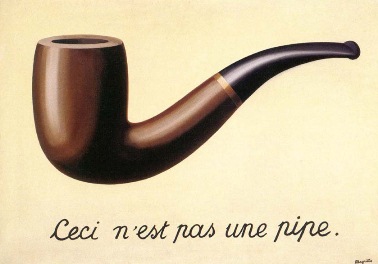
In its ordinary use, we speak of language as working under a binary regime. Words, sentences, and paragraphs are interpreted as essentially being signs. These are binary because they comprise two elements: a signifier and a signified. The sign itself is what bundles these two elements together. For instance, the signifier “dog” signifies the idea of a dog. So, when we use the word “dog”, we are invoking this idea of a dog; we are signifying it.
Some could argue that we are in fact in a ternary regime, because the sign is also tied, albeit indirectly, to the real thing itself. The real dog that is next to us is a particular instance of the universal idea of a “dog”; its unique characteristics —physical traits, behaviour, personality, anecdotes associated with it, emotional attachment, roles— condition the meaning of the sign “dog” as we utter it in any specific moment. This doesn’t alter the dictionary definition of what a dog is in its simplest terms, but it expands its semantic domain: its possible additional meanings, what other accessory descriptions are compatible to the idea of a dog, and so on. This occurs because many people have their own personal experience being with dogs in real life, and all the details they observe in these real experiences with dogs bring additional possible associations to their ability to speak about them.
On the other hand, when we speak of signs being binary, we subscribe to the belief that the word “dog” refers only to a fixed concept of a “dog”, not the reality of an actual dog. Real dogs may vary in their characteristics and rise above, or outrun, the conceptual definition of a dog, but the definition itself remains unchanging; it is static, confined within clearly delimited, abstract conceptualisations.
In other words, the meaning of the sign “dog” is predetermined, it “says what it is, but it will not be anything more than what it says”. We won’t begin with “dog” as an empty signifier (a signifier waiting for us to point at something and declare it as its signified), point to our friend’s dog, and observe it in order to infuse the signifier “dog” with meaning according to the characteristics of this real animal in front of us. Instead, we will simply draw this signifier’s limits according to the simplest, irreducible collection of traits that can only make us think of a dog —that is, the fixed representation of a dog to which the word “dog” corresponds: traits present in every single dog across the board, yet never perfectly corresponding to any actual dog.
The ternary regime is less precise. It predates the idea of language’s potential as a vehicle for objective rational discourse, where we can strip our observations of phenomena from any subjective qualifier so we can describe objective reality in its mechanical essence: physical objects interacting within the confines of physical laws (humans included, insofar as we faithfully adhere to evolutionary psychology and neuroscience as the hard science explanations of humanity). The ternary regime is an expression of what Foucault in this citation calls “the living being of language” or l’être vif du langage.
To my understanding, he is referring to this fluid relationship with that third and elusive element connected to the sign. This element is reality itself.
Literature and the aliveness of language
“…the living being of language.”
One of the functions that literature fulfils is the reaffirmation of that alive quality of language.
First of all, literature was defined as a separate domain of human knowledge-making fairly recently. In the great 19th century project of rigidly distinguishing institutionalised domains of human endeavour, the idea of literature was carved out in contraposition to “humanistic academia”, “journalism” and “scientific writing” —an artificial operation similarly applied to the domain of “religion”, which became distinctly separated from that of “secularism”.
Right now I am speaking of this particular demarcation of what literature is: a realm where language is exclusively devoted to poetry, prose, novels, short-stories, genres of fiction, and so on. And I think that the particular way in which literature employs language —and is constituted by it— essentially manipulates signifieds, thereby reinvigorating their signifiers.
What I mean is that literature contains dense, sensorially and subjectively rich descriptions of events, alongside unique ways in which it arranges phenomena to present narratives in a light specific to each literary work (narratives being sequence of events, of interactions between beings oriented towards some form of transformation, underpinned by an arc of beginning, middle, and end).
By executing this vast semantic operation, literature creates new representations saturated with meanings that draw from reality in a holistic manner: through a keen awareness of input from all perceptual senses, through free association, subjective experience, playful (that is, unruly as opposed to systematic) empirical observation, narrative movement (including context: signified things shaped by their interrelations with contextual phenomena and the passing of time), poetic connection via new metaphors, perception and interpretation through the lenses of emotions, an intention to articulate aesthetic experience and evoke the beauty in things and moments, and so forth. These holistic representations are what constitute a manipulation of signifieds.
We can gain more clarity about this mechanism of manipulation if we think about it through the aforementioned ternary regime: there is a signifier, a signified, and a reality. The writer seeks to represent an experience situated halfway between reality and imagination (which may be pure fictional creation, but invariably draws at least partly from the subjective experience of reality) through the use of words, which themselves function as signs. To avoid confusion, the signifier, as opposed to the sign, is also represented by the word, although only in the sense of the arrangement of letters that form it, prior to our consideration of its meaning.
Only when this letter arrangement is linked with a signified —which itself attempts to capture some aspect of reality (or of imagination in its pre-conceptual form)— does it transform into that tripartite composite entity we call a sign.
Literature reframes the meaning of words and our relationship with them
“…literature is what compensates for . . . the signifying function of language.”
When the writer uses words to represent this hybrid between reality and imagination in an evocative manner through the literary genre, she is enriching the meaning of the words themselves—that is, signifieds transform in the reader’s mind (more so if they resonate with the reader and evoke genuine emotional investment).
In literature, reality is a fluctuating, endlessly rich field. For literature, reality cannot be entirely grasped through words, which means that words’ meanings are never closed. Thus, in the literary domain words possess a heightened, unfettered potential; their signifiers remain perpetually malleable, limited only by how far their signifieds can reach and be reconceptualised accordingly (what could be called a signified’s elasticity). When engaging with a piece of literature, a reader is refreshing their signifiers through both a vicarious experience of the narrative and an identification with elements within it.
Thus, as Foucault observed, literature is a kind of sanctuary where language preserves its living being. The trick is that literature refuses to venture definitions of words. Instead, it suggests their meanings in an open-ended manner. It enables them to flourish in the reader’s mind through their constant motion, as they relate to other words within the text itself, the narrative it evokes, and the particular way of organising the perception of reality it presents.
And above all, literature provides a stream of imagery which establishes an ideal domain where the reader’s mind participates in the shaping of signifieds. Writers evoke imagery through their words, yet they do so less as painters or film directors than as sketch or concept artists. The reason is that words can only go so far in providing a complete vision of a narrative scene; they rather serve as interconnected reference points. The distances these connecting threads span from one reference point to the other are (akin to an intricate yet bare-bones structure) filled with gaps. The reader fills these gaps by flooding them with his own imagination, which in turn is prompted by the words themselves.
In this sense, imagery complements the capacity of words to expand signifieds, though through a different operation: the non-verbal vision of a narrative situation becomes the source of new ideas that the reader discovers by exploring the scene in his mind (just as ideas emerge when observing an event in real life without the aid of words narrating to us what is happening).
Hence, in literature the real world acquires fluidity in its interpretation. Literature works through fluid signifiers, which encompass areas broad enough for signifieds to play upon the field of reality. They widen and shrink their elastic boundaries without the signs becoming too detached from whichever thing in reality the signifier is pointing to (that is, its referent). Thus, signs preserve both their accuracy and their fluidity by adapting to reality in a dynamic responsiveness —they are not anchored to a single representation: they are the representation itself in an ongoing, active interaction with reality.
An example: experiencing literary alchemy in Jane Austen
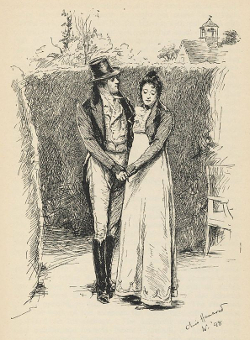
“This gallant young man, who seemed to love without feeling”. Jane Austen, Emma, 1815.
The reader of this passage from Jane Austen’s novel Emma will have experienced this aliveness of language after having finished and digested the book. In his daily life, he will encounter any of the signifiers contained in, for example, the passage above, but applied to other realities external to the book*.* When later they see the verb “to love” elsewhere —that is, in another context— the word will not simply denote whatever conventional definition of love he is most intuitively familiar with, but traces of Austen’s depiction of love will be interspersed into the word’s signified meaning.
Although these traces may often be subtle (depending on the level of resonance that the reader finds in his engagement with the book), they will not be inconsequential for several reasons. One such reason involves the aforementioned workings of imagery: the images that the reader incorporates in his imagination by reading this book might not immediately yield clear, verbally articulable meanings that shape whatever representation of love contained in his mind. Yet, they do operate as an undercurrent, influencing their understanding of love through unconscious suggestion.
The second reason is that whatever the proportion of the effect of Austen’s depiction of love is on the reader’s signified of love, these traces serve as seeds for future encounters with other literary works. What begins as a collection of subtle impressions, details and intuitions about love gained from reading Emma can set the direction for other literary depictions that will build upon them. In this way, the reader’s mind will have been opened and left in a state of receptivity that heightens the elasticity of their signifieds.
The idea of love that Austen develops through her narrative takes shape within the context of how she relates the story’s events (her storytelling), and how she portrays her characters, the world they inhabit, their perceptions of it, and, most significantly, their interpersonal relations. The resulting understanding of this idea of love, which emerges in the reader’s mind as he progresses through the story, will become part of the signifier “love”’s signified.
And, following this renewal of the word “love” —what those four letters are collectively supposed to evoke in the mind—, the reader’s witnessing of a real world manifestation of what he interprets as love will be conditioned by this signified. It is a signified suffused with Austen’s meticulously crafted portrayal of love within her narrative: a signified straddling the boundaries between an idealising, avid imagination, and a reality observed from a holistic standpoint. Then, how the reader will interpret, decide and behave when faced with this real world manifestation of “love” will become shaped by the enriched meanings acquired through his literary journeys (in words, concepts, personal interpretations, imagery, etc.).
The point of equilibrium where meaning and reality come together
I believe that a ratio exists between how much of the signified is immediately apparent, related to the reality that it is assigned to, and how much remains a potential not yet existent in the reality it currently refers to.
There is a point of equilibrium between these two coordinates, where the signified is faithful enough to immediately apparent reality (e.g., the reader justifiably characterises his relationship with his partner as a “loving one”), while the potential yet currently inexistent qualities of that reality (a love containing the depth and fruitful self-awareness found in Jane Austen’s depictions) can manifest itself given the constraints of what is possible in the present moment.
In other words, this equilibrium of literary alchemy concerns a signified that is representative enough of its assigned reality, so as not to be so distant it as to simply become inaccurate, while containing unrealised potentials within that reality that are possible but have not yet manifested for various reasons. For instance, the signifieds conventionally attached to it may be too narrow and restrictive, preventing people from recognising the presence of these potentials.
It is an equilibrium where reality adapts itself subtly toward the signified, while the signified reciprocally moves toward reality. Of course, this represents just another way of modifying the reality around us, just as simple action with a purpose accomplishes through other means. Nonetheless, this semantic operation that revitalises language and renews the inner world of its readers remains uniquely characteristic of literature.
“I have forgotten the books I have read, and so I have the dinners I have eaten; but they both helped make me.” Attributed to Ralph Waldo Emerson.
Information distribution paradigms and passive content consumption
It is clear that the circulation of information regarding public affairs (politics, economics, and other issues that affect the majority of a country’s population —and very often the world in our globalised era) is far less centralised than it was with the mass media model. This was the model dominated by newspapers, television, radio, and publishing houses.
Nowadays we consume information within a decentralised model that nonetheless tends to facilitate access to some media much more than others. It is a model of algorithmic curation, of metrics based on popularity, paid advertisement, ranking systems, and the classification of content according to calculated personal preferences. Recently, a new model is also entering the scene: that of AI synthesising information from multiple sources and responding with accuracy and in real-time to questions asked by the audience.
Regardless of which of these three models a given user consults most often, there is always one kind of information that will tend appear more often than others. For instance, in the algorithmic model, ‘mainstream’ information might not be what a user regularly consumes. Expressing a slight interest down this route will result in a large amount of exposure to ‘mainstream’ information. Conversely, showing a similar level of interest to a more uncommon type of information would produce a proportionally lesser degree of exposure to it.
The exception of this is information that is compatible with a particular well-established niche interest. Still, in these cases, the user’s identity would be categorised as likely having affinity with a subculture, and they would receive streams of information that is non-relevant to them. Thus, a user who is not actively tending to their media consumption will, on average, be mostly exposed to mainstream information —or bundles of information attached to statistical presumptions about their niche interest.
The situation is different with AI. Yet, it does require a higher degree of active consumption than regular algorithmic curation, as the user must actively engage with a language model to get answers from it.
Information valves: conceptual systems for media curation
Media curation projects are crucial tools to counteract this phenomenon, especially when the current dynamics of mainstream information —this includes information from popular social media influencers and many of the derivatives building upon the intellectual trends that they engender— seem to hit an impasse regarding how conducive they are to productive public discourse and the generation of constructive incentives for public figures.
A particular type of media curation project could be called a information valve project (IVP). A IVP is the combination of three elements: a particular conviction on a different way that information could flow; experimenting with mechanisms that systematise these flows and make them accessible; and actively educating the public on this particular take on better information flows.
Thus, a different information flow involves a particular regulation of information balances —what information should be more readily available, and what other excessively present information should be less facilitated. At the same time, each information flow has its own principles regarding how information could be organised: how it is classified, from primary to secondary types of information, how it is sequenced, what conditions a narrative needs to fulfil in order to be valid as such, whether it is hierarchical or not, checklists of prerequisites, etc.
Each of the paradigms described above also functions by its own information flow principles. The difference is that they often remain unstated, inaccessible, and are designed by centralised entities (such as corporations) over which the regular consumer has no agency whatsoever. In other words, they are flow and organisation principles subtly, and gradually —perhaps insidiously?— imposed upon the passive consumer.
Then, the education of the public consists of developing ideas, concepts, and discourse in general so that it is easier for people to discuss this issue and be better equipped to navigate the intricate waters of conscious media consumption, which includes the design, implementation, and constant refinement of personal information diets.
An example of a media curation project: incentivising public figures to admit that they made mistakes and have learned lessons
This IVP would compile claims by public figures that turned out to be not fully accurate, or that when analysed in depth were not the most congruent with their overall position.
It would comprise a virtual space —or knowledge space— that would trace how that public figure learned from that mistake and evolved their thinking, showcasing their capacity to evolve. This media project should be easily accessible. It should be easily findable and accessed through a centralised entry point, so that consulting it can become an automatic habit, just as the usual news portals or social media sources are so adept at inducing.
The key function that would underpin this IVP would its specificity in how it organises information. It would first curate content pertaining a particular public figure —or why not an entity, such as a political party— and then arrange that content chronologically, thematically, or conceptually to portray the evolution of that person’s thinking, how their current claims, actions, mission statements, and so on have changed compared to their positions in the past. It would not necessarily do so in an accusatory tone, as it would first and foremost focus on normalising the notion that it is laudable to make one’s mistakes and lessons learned from them loud and clear.
After all, the purpose of this IVP is to incentivise a constructive attitude toward dissonances with our past selves, and make visible these instances when they represent personal growth.
This process of organising information does not have to be fully automated, in fact, the hand of patient human work from committed participants in peer-relations would be indispensable.
The underserved virtue of publicly being a work in progress
It incentivises public figures to admit when they are wrong and not fear that their thinking is not static, but constantly open to evolution, without needing to be a perfect finished product the moment they cross that threshold into public exposition and accountability.
If there are no incentives for admitting that our past rationale was not optimal, a natural consequence is that exhibiting an evolving thought-process, a permanent state of learning in good faith, a realisation that something in our past declarations did not quite click with the directions their project would take over time, will not be a widespread practice among people in prominent roles. These are people with large amounts of responsibility and leverage in the shaping of societal discourse, the allocation of public attention toward certain issues over others, the production and implementation of policy, the safeguarding of the credibility of public institutions, and the formation of social values and norms.
It is a pity that what amounts to an important sign of maturity in regular civilian contexts is rather an anomaly in politics -where it matters just as much or even more in some instances. It goes without saying that the opposite of such displays of maturity is childishness, even puerility.
Public figures need to be able to signal that their thinking is evolving without fearing hasty accusations of dishonesty, manipulation, hypocrisy, incompetence, or stupidity that catch momentum at a speed almost impossible to dispel in the current informational landscape. Such impossibility creates an incentive for counterproductive obstinacy and the degradation of verbal discourse to a shadow of itself: just another shallow ornament to pure power play, which for some seems to be the supreme metric for political efficacy (and not necessarily in service to the governed people, much less to humanity as a whole).
The expression of ideas is important not only as a way of introducing accountability for public figures (i.e., are they a person of their word?) but also for giving names to problems and opening avenues for finding solutions to them.
This ultimately facilitates the process of collectively figuring problems out. While public figures do so in a top-down fashion through their work, other actors, including regular people, becoming aware of these problems, discuss them, dig deeper into them, and possibly also initiate the implementation of solutions but from the ground up.
It is a truism to say that we learn lessons along the way and we correct course accordingly. Yet, when it comes to the reputation of public figures, their ability to do so transparently is not observed and discussed as commonly as one should reasonable expect. And unfortunately, the presence of clear praise for this in public discussions is even less common. The incentives simply are not there.
Dorothy clicking her heels, the waving of magic wands, a sorcerer casting a spell with his hands, Bewitched’s Samantha twitching her nose, the wizard Howl snapping his fingers, Aladdin’s Genie willing things into existence. These are all expressions of magic.
What are the most fundamental components of magic? In other words, what elements appear consistently across virtually all depictions of magic? What few components represent the minimum requirement for an action to be interpreted as magic?
Magic consists of the establishment of an intention followed by a simple action which triggers the realisation of that intention. Typically, these come in the form of incantations, single gestures or sequences thereof.
This simple action then translates to one of a set of possible effects in the world. The magician is the one who decides which of these effects it will materialisw. The effect itself can be anything as long as the ‘type of magic’ invoked permits it: moving an object at a distance, producing fire, causing reactions in someone’s body, metamorphosis, manipulating the weather, opening portals, healing wounds, fixing things, flying, animating objects, and so on.
Thus, a formula that distills the essence of what makes something an act of magic -a syntax of spellcasting– could be:
[ the establishment of an intention
+simple action with a single implement (the implement can be an inanimate object such as a wand, a gesture through the caster’s body, or an incantation)
= one effect from an array of effects → 1, 2, 3, 4, or 5, depending on the intention, and usually in the form of action at a distance]
One might look at this formula and observe that one could very well apply it to certain technologies, as technologies can also perform action at a distance.
The ‘establishment of an intention’ comprises choosing from the interface what the machine will do.
The ‘simple action with an implement’ translates to interacting with an interface (which can just as well involve sending instructions through voice or through neurotechnologies such as implantable brain-computer interfaces).
The effects are whatever functions the machine is capable of carrying out. Instructions sent from interface to machine through wireless technologies constitute the technical equivalent of an effect performed through action at a distance (e.g., in magic, the caster selects an objective at a distance and the magical effect takes place upon it without any physical element connecting them both).
Differences between technology and magic
There are three essential differences between magic and technology.
The first is that the implement and the effect are not necessarily related. While the implement generates the effect, nothing in its physical characteristics hints at a particular function; Dorothy’s heels can trigger the effect of teleportation, but the shoes are regular shoes with no material difference from any other pair of shoe. They somehow generate that effect without any perceivable triggering component: there are no inner circuits, no chemicals, no rare materials. If we were to break them apart, there would be nothing suggesting anything that produces teleportation. This phenomenon can be called a causal discontinuity.
The second difference concerns the source from which the effect materialises. In the case of magic, it materialises either out of thin air or from the implement itself. With technology, it will always be produced by a machine’s components. We might be able to fly at the push of a button, but it will be a drone that carries us. If it were magic, it would suffice to carry the remote control with us and we would fly without the drone. Thus, this difference concerns the effect itself, which in the case of technology requires an additional element, the concrete mechanism —the effecting machine—, that must be present to materialise the effect. In magic that element is not necessary. I will call this non-reliance on effecting machines effect autonomy.
The third difference is simple resource singularity. In contrast with action at a distance through technology, where multiple rare components such as metals, minerals, synthetic elements and energy sources need to be coordinated, only one type of resource is necessary to fuel the conjuring of magic. Depictions of magic typically characterise this resource as ‘mana’, which is a way of naming mysterious spiritual or cosmic forces. These forces provide the energy responsible for catalysing magical effects. I call mana a single resource because a practitioner of magic can transmute its energy into a profoundly diverse assortment of unrelated effects; these effect share little in common apart from having been produced with the help of mana.
It is thereby a simple resource singularity: a single type of resource is all that is required as energy for triggering anything involving ‘magic’, and this energy reaches its destination —the triggering of an effect— without the need for any mediation. It arrives unmediated, unfiltered, in a pure state: through simple means.
A situation in the realm of technology parallel to simple resource singularity would consist of summoning any of a smartphone’s functionalities solely through the use of electricity. There would be no need for circuits, batteries, antennas nor sensors. At most, one single rare element might be needed apart from electricity, just as, for example, a ‘magical’ stone is required for some magical implements to work. When it comes to the real world, a smartphone needs multiple resources channeled through complex means.
Essentially, magic is the engendering of an effect that is seemingly1 unrelated to the physical characteristics of the tool wielded to trigger it; it dispenses with the need for a technical object that can materialise this effect through its inner mechanisms; and, typically, it requires only a single resource, channeled through simple means (raw energy streaming through without the mediation of complex mechanisms such as circuit boards) to be summoned. Magic is almost artefact-independent. It does not require any infrastructure nor technological devices to be performed. A practitioner can be lost deep in the jungle, far from any trace of civilisation, and still perform their magic without any hindrances beyond needing to recharge their mana, which replenishes naturally without the intervention of any force external to the magician’s body.
Another point where technology and magic are converging.
It’s hard to imagine how a technology with these three characteristics —causal discontinuity, effect autonomy, and simple resource singularity— would work with our current scientific knowledge and technological capacity. The only place where fulfilling them seems possible is in the digital world, where ‘magic’ in this sense can happen, because we can manipulate the digital with almost godlike omnipotence. Yet, these are effects that belong to the domain of illusion rather than true magic; they are simulations where omnipotence can be achieved similar to how it works in our imagination.
However, there is a point where technology and magic—as considered from these three characteristics—are converging. This point is the growing multiplicity of actions that one can execute through a single interface, along with increasing simplicity and speed in navigating these options. A stark example is a vocal prompt interface which translates a conversational type of interaction into instructions for an artificial intelligence application. In this case, our only implement would be a portable computer (such as a smartphone) with a microphone, capable of running the AI software that processes our voices. In terms of the formula outlined at the beginning of this text, the distance between the establishment of an intention and the effect is shortening. Meanwhile, the triggering action is becoming simpler (a string of text, a voice command) while the array of possible effects from a single implement is expanding.
The implication of this convergence is that ‘superhuman’ or enhanced human actions can be performed in increasingly simple and intuitive ways. We can consult ‘oracles’ by a mere voice command, we can control indoor illumination, talk at a distance, meet in virtual reality spaces, instruct machines to perform actions, control robotic limbs, and so on.
Will human progress eventually lead to the possibility of magic?
Maybe magic will someday become possible. At this point in time, the closest we might come to magic is in the elegance of our use of technologies: low resource use, a single interface for a multiplicity of actions, and simplicity yet precision (a more accurate and instant interpretation of our intentions). However, as far as I am concerned, effect autonomy does not look anywhere close to becoming a reality—how can we create an effect at a distance and out of thin air?
What I am most optimistic about is the existence of portable, versatile machines that can materialise a wide range of effects while being instructed and controlled remotely through a simple interface. The pinnacle of this interface simplicity would be communication through subtle bodily gestures, customisable to highly personal preferences, mere thought, or vocal commands as quiet as whispers. The range of effects that these machines could materialise would certainly be limited due to the physical limitations of a portable machine, but it would be highly customisable, just like in some lores magicians can only carry a limited selection of spells that they choose from their repertoire before beginning the day.
And if we were to imagine further ahead into the future, nanotechnologies might be the closest approximation to ‘magical action’ fulfilling these three conditions to a certain extent. While they might not technically do so, nano-components could become so effective, energy-efficient, and imperceptible that they would persuade us at the level of raw human perception that something akin to magic is happening
The advent of biotechnologies is also an event that brings us closer to the possibility of more ‘magical seeming’ capabilities. Magic is intimately connected with nature because it does not depend on any artefact, machine nor infrastructure created by human civilisation. Visually speaking, magic does not involve the participation of any human-made object: there is no intermediary between the magician’s action and the effect it produces. At most, this intermediary is a simple, causally discontinuous object, such as Dorothy’s shoes or Gandalf’s staff.
Magic inhabits an overlap between human body/spirit, nature and cosmic forces, rather than relying on deliberately engineered systems and infrastructures needed to support its functioning.
In any case, it is almost redundant to say that our unknown unknowns are likely limitless: there are pieces of the puzzle of possibilities in this world—or perhaps extensions, new dimensions to the puzzle, or even wholly different puzzles—that we might discover in the future that we just do not even know we don’t understand, because we remain unaware of them. For now, as we have always done thanks to our human ability to fantasise, we can imagine how some yet inexistent things could look like.
Maybe magic is a retroactive prophecy that describes a particular state of technological progress, where what we previously thought was magic becomes indistinguishable from technology in every regard —except that the former has always worn the colours of the supernatural, while the latter is man-made. Alternatively, it may be an unattainable ideal that orders our priorities regarding what technological progress looks like, just as the idea of God represents a perpetually distant, unattainable ideal of absolute cosmic power and agency.
After-thought: otherangles to explore
As an after-thought, the topic of accessibility to technology versus accessibility to magic—the difference in who and under which conditions and criteria gets to access them—is a natural follow-up to this speculative comparison. The fact that magical capabilities can be acquired through genetics, intellectual teaching of secret knowledge, the manifestation of untapped magical capabilities, the possession of a magical object, the favour of a magical being, an initiation ritual, and so on, is non-trivial: how does this compare to the means by which people gain access to technologically afforded capabilities? And how does a notion of magic relate to individualism? Technology is built upon human collaboration at a vast scale, while the magician seems to enjoy absolute independence in their practice of magic.
Another related topic that I might explore in the future is its semiotic or linguistic side: a comparison of Kaos magick with AI prompting and Ursula K. Le Guin’s idea of magic being controlled by a primordial language which gives things their ‘true names’.
I say ‘seemingly’ because even with the kind of magic described in fantasy and other kinds of fiction there could always be other frequencies or currently unknown forces that explain them; they do not necessarily materialise out of nothing) ↩︎